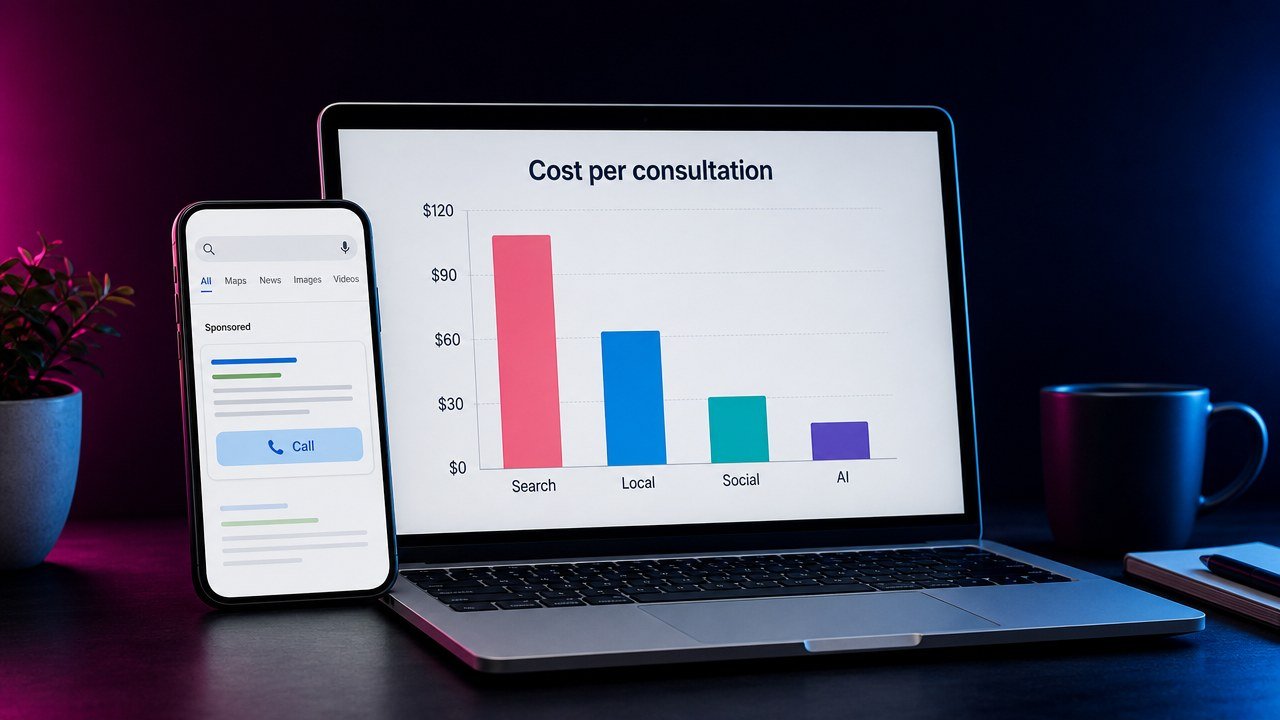
Most law firms waste retainer budget because their agency reports clicks instead of signed cases, keeps the firm’s website and ad accounts, and ignores intake. Before you sign, check for seven things: reporting tied to signed cases, full ownership of your assets, local exclusivity, fast intake, bar-compliant copy, no long lock-in, and a real negative keyword list.
7 Critical Red Flags When Hiring a Digital Marketing Agency for Attorneys
Rocket Launch Media works only with immigration law firms. It’s a one-time 90-day build, no monthly retainer, and the firm owns everything at day 90.
Rocket Launch Media is an immigration law firm marketing agency based in Columbus, Ohio, founded by Ahmed Elmahdy. We see the same problems every time a firm brings us a campaign built by a generalist agency: expensive clicks, weak intake, fuzzy reporting, and contracts that make ROI hard to check.
This checklist is for managing partners. An agency should free up your billable hours, not become a second job. If an agency does any of these seven things, your money is at risk:
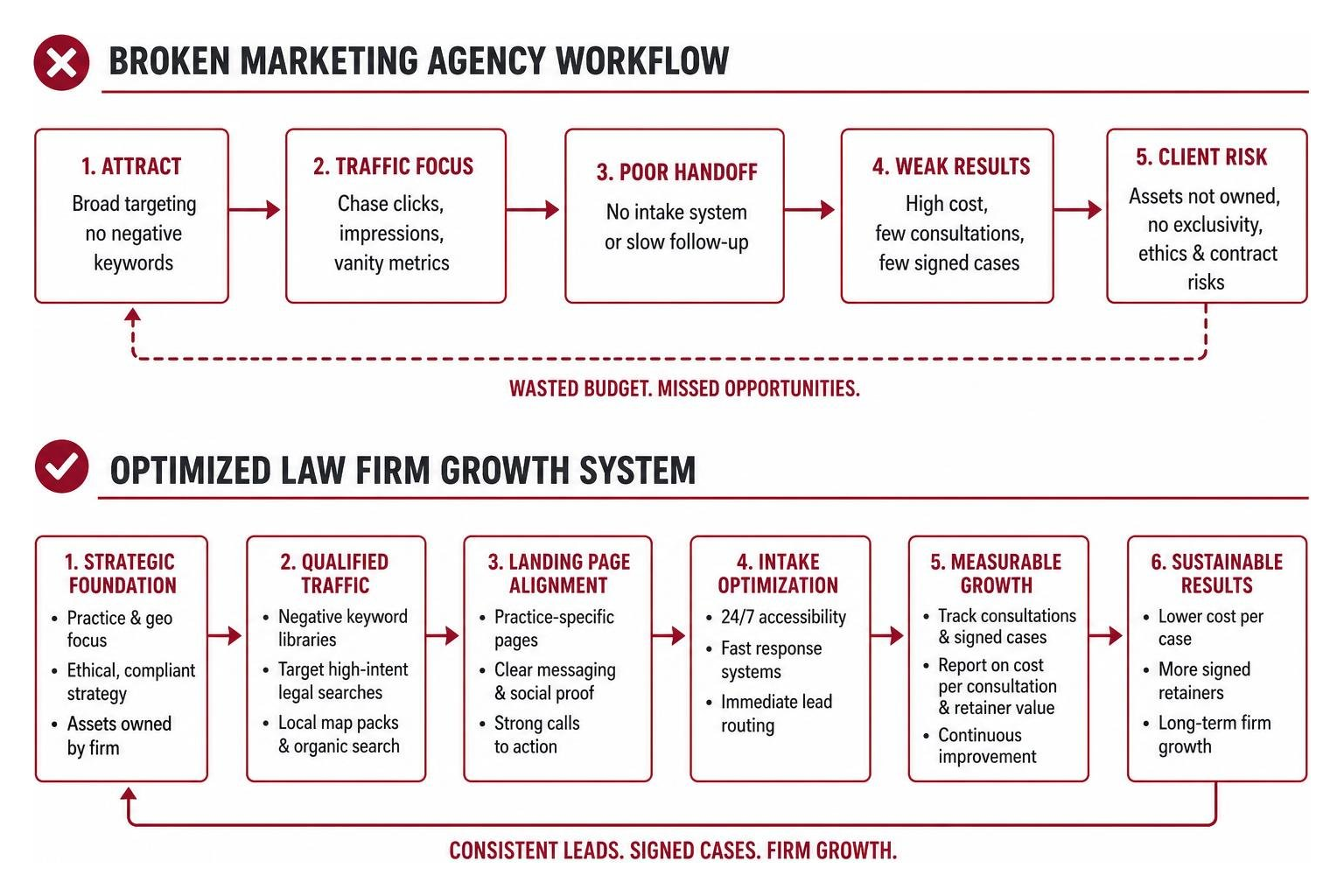
- Reporting vanity metrics over signed cases: Clicks, impressions, and traffic don’t pay rent. If the monthly report shows page views but skips cost per consultation and signed retainers, the agency is hiding something. Our Facebook ads for lawyers guide spells out the three numbers to demand: cost per lead, cost per qualified lead, and cost per retained case.
- No negative keyword lists: Bidding on “car accident lawyer” without negatives means paying $100+ a click for people searching free legal advice, paralegal salary, or police reports. A good legal agency loads a big negative keyword list on day one.
- Holding your assets hostage: Some agencies build sites on their own platform or run ads from agency-owned logins. Cancel, and you can lose your website, ad history, and tracking data.
- No local or practice area exclusivity: An agency can’t fairly push three competing injury firms for the same keywords in the same city. There’s only one top spot.
- Ignoring intake: Clicks without fast follow-up are wasted spend. If nobody calls the lead back quickly, the marketing ROI falls apart.
- Ignoring bar advertising rules: Generic agencies write “best attorney” claims or imply guaranteed outcomes, which can expose you to discipline under the American Bar Association (ABA) Model Rules.
- Multi-year lock-in contracts: Long contracts with no performance milestones protect the agency, not your money.
Vetting a Specialized Digital Marketing Agency for Attorneys vs. Generalists
Generalist agencies run ecommerce stores, restaurants, software companies, and law firms all at once. They tend to miss what makes legal searches urgent.
A specialist knows a criminal defense prospect needs an answer right after an arrest, while an estate planning client needs education and social proof. An immigration prospect often needs Spanish-speaking intake and a same-day answer about a hearing date.
Legal specialists write ads around state bar rules, route intake by practice area, and build landing pages for each case type. In search campaigns, that focus plus tight negative keywords and offline conversion tracking cuts the wasted spend you see in generalist setups.
Contract Transparency and What a Digital Marketing Agency for Attorneys Must Guarantee
Before you sign, protect your property, your data, and your money. A transparent agency gives you clear deliverables and full admin access.
Your firm should own its domains, website code, and ad accounts. Whether it’s Google Local Services Ads or SEO for Immigration Attorneys, keeping admin control means your data stays yours if you switch partners.
Core Marketing Services That Drive Retained Cases
Profitable legal marketing has three connected parts: organic visibility, paid search, and fast conversion. That’s how we work with immigration firms. The goal is retained cases, not traffic.
Search Engine Optimization and Local Map Dominance
Most people looking for a lawyer start with a search engine, and the top organic and map results get most of the attention. That’s why SEO builds lasting value for a firm. One immigration firm we work with got 143 calls from Google Business Profile in June 2026 with no ad spend (Rocket Launch Media client data, 2026).
Winning local search takes:
- Google Business Profile (GBP) optimization: Right primary categories, consistent NAP (Name, Address, Phone) citations, and steady reviews to rank in the Google 3-Pack.
- Entity authority and legal schema: Structured data so search engines and AI answer engines cite your attorneys, practice areas, bar admissions, and offices correctly.
- High-intent content hubs: Detailed guides on legal questions, local filing steps, and state court processes.
For specialized firms, GEO for Immigration Law Firms captures high-intent traffic across regions and in AI search results. For the map pack, see our guide to local SEO for law firms.
High-Precision PPC and Local Services Ads Management
Pay-per-click (PPC) ads and Google Local Services Ads (LSAs) put your firm at the top of the results page, right when someone needs a lawyer.
To keep costs down:
- Use Local Services Ads: LSAs charge per lead and often beat standard search ads on cost per lead for family, criminal, and immigration practices.
- Raise Quality Scores: Better ad relevance, click-through rate, and landing page match lift Quality Score, which lowers what you pay per click.
- Check search terms daily: Adding negatives fast stops budget leaks.
Rapid 24/7 Client Intake and Web Conversion Infrastructure
Traffic without intake is wasted money. People expect a fast reply from a lawyer, and many hire within hours of their first search. In one immigration firm CRM we audited in September 2026, 576 leads produced 216 booked consultations, and 85% of those booked consultations never got a human call or text. The ads worked. The follow-up didn’t.
Good law firm websites swap static contact pages for step-by-step forms and automatic scheduling. Layouts like the ones in Website Design for Immigration Law Firms cut drop-off and turn visitors into booked consultations.
Agency Pricing Models and Retainer Structures Evaluated
Know how an agency gets paid so its incentives match yours. Judge every model on retained cases, not lead counts.
| Pricing Model | Average Monthly Cost | Key Advantages | Potential Drawbacks | Best Suited For |
|---|---|---|---|---|
| Flat-Fee Retainer | $1,500 – $6,000 / mo | Clear costs; no reason for the agency to inflate ad spend | Ad spend is managed separately | Solo, boutique, and mid-sized practices |
| Percentage of Ad Spend | 15% – 25% of media budget | Scales with campaign size; lower base fees | Agency earns more when you spend more | Large or multi-location firms spending $30k+/mo on ads |
| Performance-Based / Per Signed Case | Setup fee + cost per retained client | No risk on unqualified clicks; tied to revenue | Strict intake criteria | High-volume personal injury and mass tort campaigns |
| One-Time 90-Day Build | One-time build, no monthly retainer | Firm owns website, ad accounts, CRM and data at day 90 | Firm runs the system after handover | Immigration firms that want an owned system, not a rented one |
Flat-Fee Retainers vs. Percentage-of-Spend Contracts
Many agencies charge 15% to 20% of your ad spend. That’s a conflict of interest: they earn more when you spend more, whether or not your cost per signed case drops.
Flat fees break that link. The agency focuses on Quality Score, keyword lists, and lower cost per case instead of pushing a bigger budget.
A fourth model is the one-time build. Rocket Launch Media sells a one-time 90-day build for immigration law firms, no monthly retainer, and the firm owns everything at day 90: website, ad accounts, CRM, content, and data. Our guarantee: “If you invest and don’t get a qualified lead worth more than what you paid within 30 days, you get all your money back. No questions.”
Performance-Based and Pay-Per-Retained-Case Models
Performance-based models tie payment to retained clients instead of clicks, so firms pay for signed cases, not unscreened form fills.
How to Measure Law Firm Marketing ROI and Case Attribution
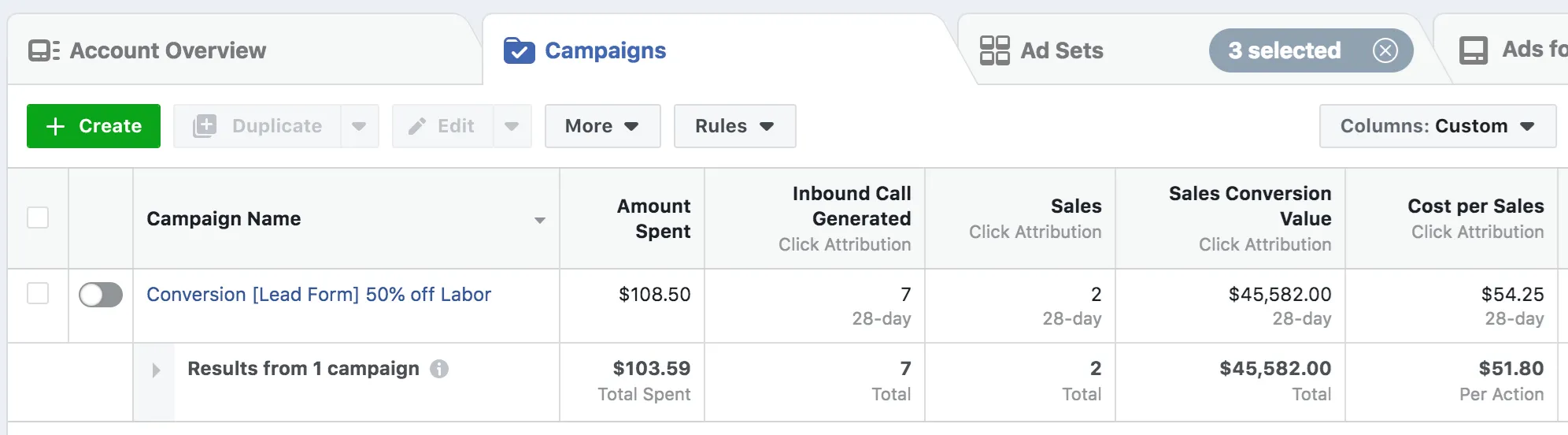
Measuring marketing ROI means tracking the whole path from campaign to signed retainer and case value, not just traffic.
To calculate true campaign ROI:
Marketing ROI = (Attributed Legal Fees Generated − Total Marketing Cost) ÷ Total Marketing Cost × 100
Where Total Marketing Cost includes agency fees, ad spend, software, and intake overhead.
Key Performance Metrics for Law Firms
- Cost Per Lead (CPL): Total marketing spend divided by inquiries. It varies a lot by practice area and channel. One immigration firm got 535 Meta leads at $3.11 each from $1,663.12 in ad spend (Rocket Launch Media client data, 2026).
- Cost Per Signed Case (CPSC): Total spend divided by retained clients. This shows whether lead quality is good enough to produce paying work.
- Lead-to-Retained Conversion Rate: The share of inquiries that become paying clients. If it’s low, check intake response time and qualifying.
- Offline Conversion Attribution: Call tracking (such as CallRail) that sends signed retainer values back to your ad platforms, so bidding chases high-value cases instead of cheap clicks.
Agency Vetting by the Numbers
$3.11
Cost per Meta lead for an NYC immigration firm: $1,663.12 in ad spend, 535 leads, 174 booked consultations.
Source: Rocket Launch Media client data, 2026
$295 vs $21–$40
Google Ads top-of-page bid for personal injury lawyer versus immigration terms. Practice area, not the agency, sets the click cost.
Source: DataForSEO, August 2026
45%
of U.S. consumers have asked AI for a local business recommendation, up from 6% a year earlier. Ask any agency how it handles AI search.
Source: BrightLocal Local Consumer Review Survey, 2026
Reuters, August 14, 2026 (Why more leads aren’t growing law firms): law firms are losing growth not for lack of leads but because intake and conversion fail to turn the leads they already pay for into clients. An agency pitch that only talks about lead volume is solving the wrong problem.
Frequently Asked Questions About Legal Marketing Agencies
How much should a law firm budget for digital marketing?
Industry surveys put the average around 5% of a firm’s operating budget, and fewer than half of firms keep a formal marketing budget at all. Firms in quieter markets or leaning on referrals often spend 3% to 5% of gross revenue. Firms chasing fast growth in competitive practice areas often spend 8% to 12% across SEO, paid search, and intake automation.
How long does it take to see results from legal SEO compared to PPC?
Paid search (Google Ads and Local Services Ads) can bring leads within 7 to 14 days of launch. SEO and Google Business Profile work take longer: early ranking gains usually show in 30 to 90 days, with real case growth between 6 and 12 months.
What questions should managing partners ask before signing an agency retainer?
- Do you offer local and practice area exclusivity, or do you work with our direct competitors?
- Will we own the website, tracking scripts, ad accounts, and landing page code if we leave?
- How do you keep ad copy, landing pages, and disclaimers compliant with state bar rules and ABA Rule 7.1?
- Do you track to signed retainers and cost per case, or only clicks and form fills?
- What’s the contract term, and is there a 30-day exit clause for underperformance?
Should a law firm hire a specialized legal marketing agency or a generalist?
A specialized legal agency is the safer pick for most firms because it already knows bar advertising rules, intake urgency by practice area, negative keyword lists, and legal directories. A generalist can work if you have strong in-house marketing oversight. Rocket Launch Media goes narrower still and works only with immigration law firms, in English and Spanish.
Do I own my website and ad accounts if I leave the agency?
Only if the contract says so. Many agencies build on their own platforms or run Google and Meta ads from agency-owned accounts, so you lose the site, ad history, and conversion data when you cancel. Get admin access to the domain, hosting, CMS, Google Ads, Meta Business Manager, Local Services Ads, call tracking, and CRM from day one. Rocket Launch Media hands full ownership to the firm at day 90.
How do I know if my law firm marketing agency is underdelivering?
Ask for three numbers for the last 90 days, by channel: cost per lead, cost per booked consultation, and cost per retained case. If they can’t produce them, they aren’t tracking to revenue. Then check speed-to-lead in your own CRM. In one immigration firm audit, 85% of booked consultations never got a human call or text, and more ad spend wouldn’t fix that.
Sources
Rocket Launch Media client data and intake audit, 2026 (Meta ads case study, SEO case study) · Reuters, Why more leads aren’t growing law firms, August 2026 · BrightLocal Local Consumer Review Survey, 2026 · ABA Model Rules of Professional Conduct · DataForSEO Google Ads bid data, August 2026.
Conclusion
A good agency is accountable, gives you ownership of your data, and reports on signed cases, not clicks. When you vet one, demand tracking down to cost per retained client, confirm local exclusivity, and make sure your intake can answer leads right away.
If you want a measurable client acquisition system built on local search and campaigns that convert, explore our immigration law firm marketing services.