A missed call can be a missed opportunity, but the answer is not simply “more automation” or “hire a service.” Law firms comparing an AI receptionist with a traditional answering service should look at the work each option can perform, the boundaries it respects, and the quality of the handoff to their team.
This guide offers a practical comparison. It does not assume that one model is right for every firm.
What is a law firm answering service?
A traditional answering service uses people to answer calls on behalf of the firm. Depending on the service and plan, agents may take a message, follow a script, collect basic intake information, transfer a call, or schedule an appointment.
The main advantage is human conversation. The main challenge is consistency and context: an external agent may have limited access to the firm’s process, and service quality can vary by agent, shift, and script.
What is an AI receptionist?
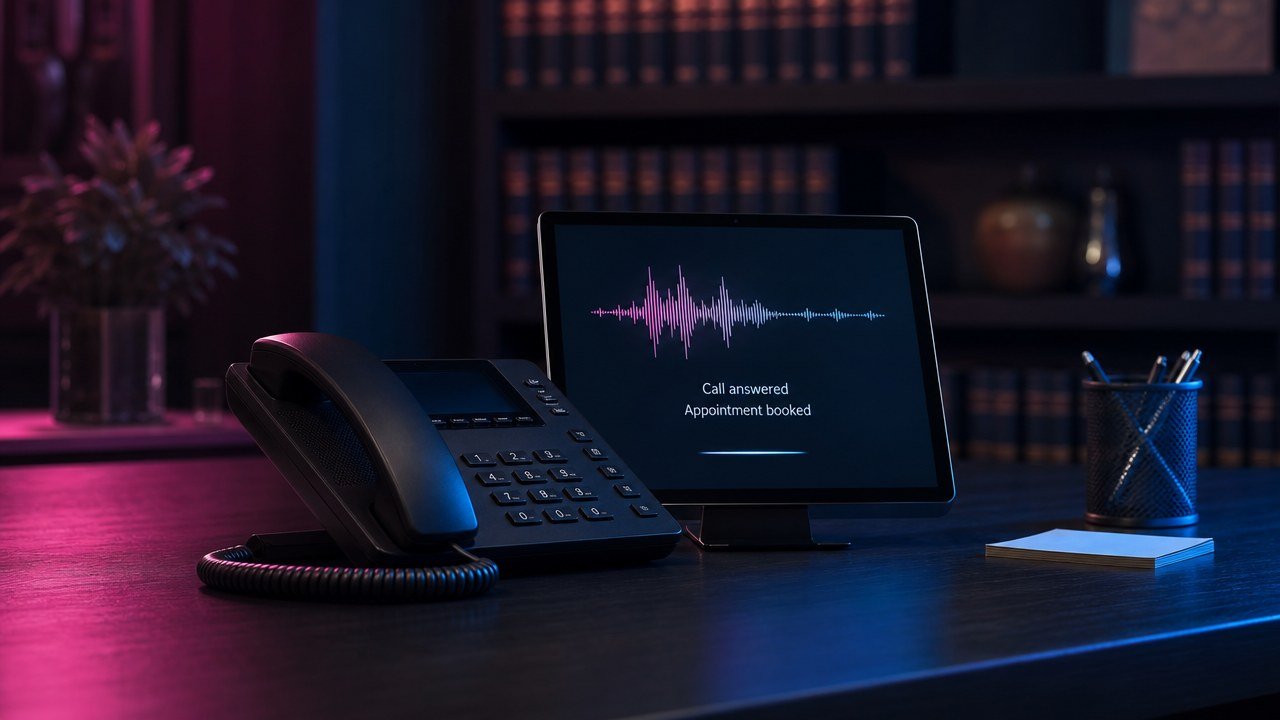
An AI receptionist uses conversational software to handle defined phone tasks. A configured system may answer routine questions, collect initial information, route a call, or offer appointment times. Its strength is repeatability and its ability to connect the call with a broader intake workflow.
Its limits matter. An AI receptionist should not give legal advice, make sensitive eligibility decisions, or pretend to be a person. The firm needs clear disclosure, escalation, review, and fallback rules appropriate to its use.
AI receptionist versus answering service
| Decision factor | AI receptionist | Human answering service |
|---|---|---|
| Consistency | Follows configured logic repeatedly. | Depends on training, staffing, and individual execution. |
| Complex conversation | Should escalate uncertainty and sensitive situations. | A skilled person can adapt, though still within the service’s rules. |
| Workflow connection | Can pass structured information into a connected intake process when configured. | May rely on messages, email, or a separate portal. |
| Coverage | Depends on the configuration, service availability, and fallback plan. | Depends on the contracted hours and staffing. |
| Quality control | Requires review of prompts, routing, disclosure, transcripts, and exceptions. | Requires review of scripts, recordings or notes, training, and escalations. |
Seven questions to compare before buying
1. What is the receptionist allowed to do?
Define the job in plain language. Is it answering, collecting a callback number, asking initial questions, transferring, booking, or some combination? A narrow job done reliably is better than a broad promise with unclear boundaries.
2. What triggers a human handoff?
List urgent, sensitive, confusing, and out-of-scope situations. Test how the system behaves when a caller gives an unexpected answer, asks for legal advice, becomes upset, or cannot use the standard path.
3. Where does the information go?
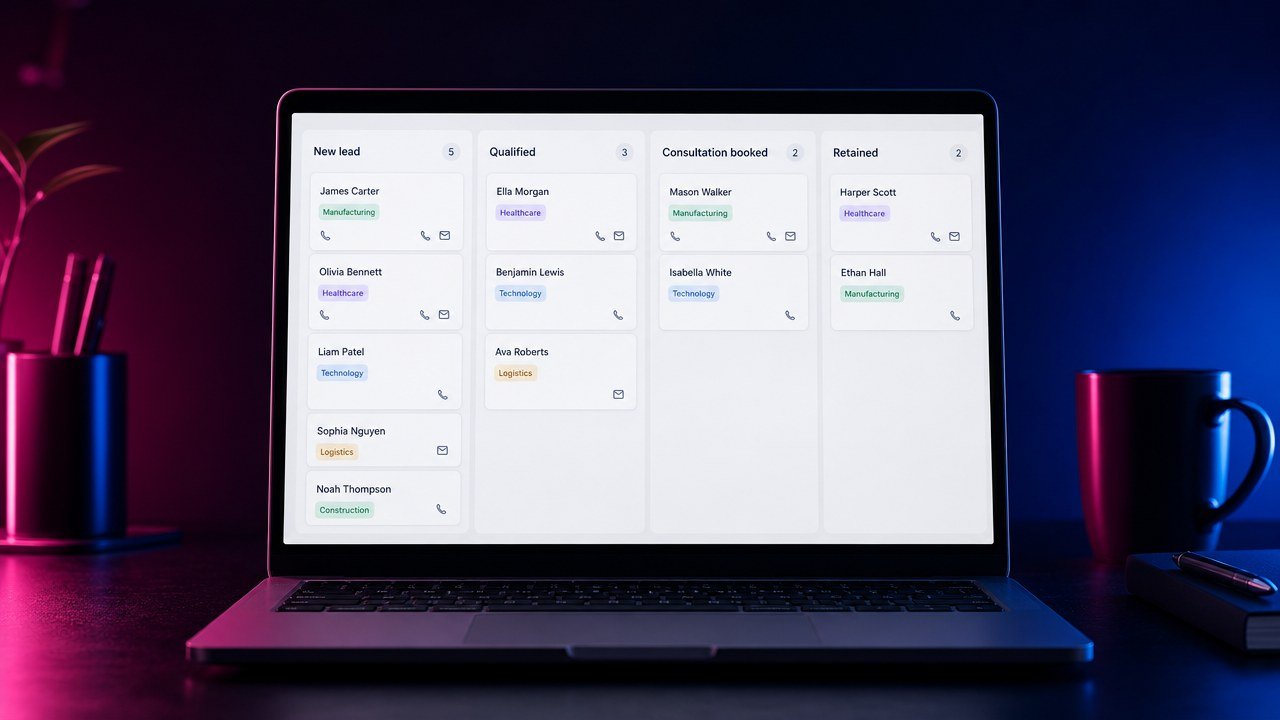
A polished call is not enough if the result lands in an inbox nobody owns. Confirm that the contact record, source, summary, appointment, and next action appear in the working system your intake team checks.
4. How is accuracy reviewed?
Ask what staff can inspect and how they correct a mistake. For AI, review the configured instructions and edge cases. For a human service, review agent notes, recordings when available and appropriate, and adherence to the firm’s script.
When generative AI is part of the system, the American Bar Association’s Formal Opinion 512 identifies competence, confidentiality, client communication, and supervision among the duties lawyers should consider. Firms should apply the rules and ethics guidance in their own jurisdiction.
5. What happens when the primary path fails?
Phone systems, calendars, integrations, and staff availability can all fail. There should be a simple fallback that protects the caller from a dead end and alerts the right person. The fallback should create a usable record, which is one of the practical checks in our guide to choosing client intake software.
6. How does scheduling work?
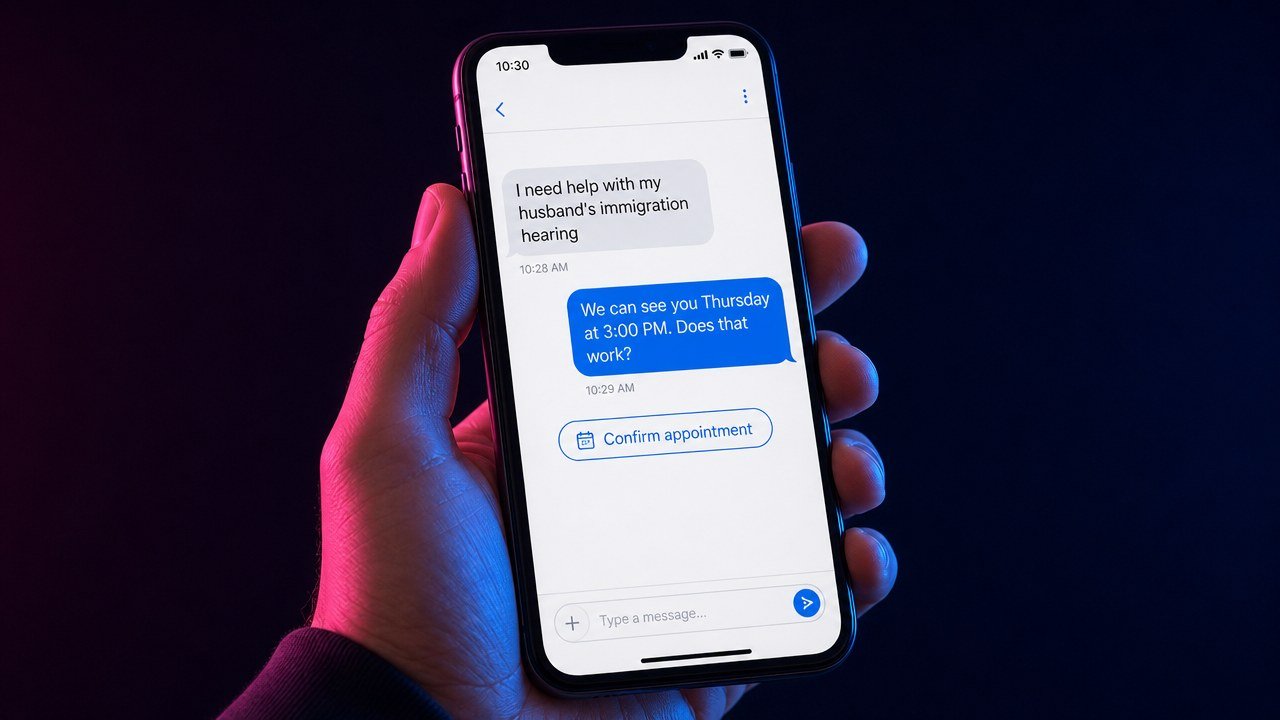
Check which appointments can be booked, what information is required first, which calendars are used, and what happens after cancellation or no-show. Do not let a convenience feature bypass the firm’s qualification policy.
7. What does the caller experience?
Listen for clarity, pace, interruptions, repeated questions, and how the system identifies itself. A technically successful call can still frustrate a caller if it feels evasive or rigid.
When a human service may be the better fit
A human answering service may suit a firm that receives many emotionally complex calls, needs flexible conversation within a narrow script, or wants outside staff to handle basic call coverage without rebuilding the intake system.
Human service does not remove the need for process design. Agents still need clear instructions, escalation paths, and a dependable way to return information to the firm.
When an AI-assisted approach may fit
An AI-assisted receptionist may fit when the firm needs consistent capture and routing of routine inquiries, wants phone activity connected to scheduling and pipeline records, and is willing to test and monitor the experience.
It works best as part of a visible intake process. Rocket Reach’s law firm CRM can connect phone handling with inquiry records, scheduling, follow-up, and human ownership when those capabilities are configured for the firm.
A hybrid model is also possible
The choice does not have to be all-human or all-AI. A firm might use automated handling for a small set of routine tasks, provide immediate human transfer for defined situations, and use a human service as a fallback during specific hours. The operating rules matter more than the label. Our law firm marketing automation guide provides a framework for owners, exceptions, and stop conditions.
Run a real-world test
Before relying on any receptionist setup, test routine and difficult calls. Include incomplete answers, accents, background noise, schedule changes, a request for legal advice, an urgent statement, and a caller who asks for a person. Review where each record lands and whether the assigned staff member can see the next action.
If the setup also sends automated outbound calls or texts, treat consent and opt-out rules as a separate review. The FCC’s 2024 consent revocation order explains that covered recipients may revoke consent through any reasonable method and that covered calls or texts must stop after a valid revocation. Have qualified counsel review the specific workflow and applicable rules.
For a wider view of the path after the call, read our immigration-law-firm intake analysis. You can also see how phone intake fits into a broader law firm marketing program. To map the phone handoff into your own process, book a strategy call.