Short answer: For most small and mid-sized law firms, an AI receptionist should answer first and humans should show up second. The AI picks up every call and text in seconds, at 2am and at lunch, in English and Spanish, asks the qualifying question, and books a screening call straight into the CRM. A legal answering service gives you warm human voices around the clock but usually cannot qualify the way you would, rarely speaks every language your clients do, and lives outside your CRM. An in-house receptionist is the best conversationalist you will have and is unavailable more hours than not. The firms that convert the most inquiries run a hybrid: AI on the front line, a named human owning every booked slot, and a monthly review of the transcripts. This guide compares the three on the eight things that matter, gives the decision rule, and shows the hybrid setup we run.
Why the Question Matters More Than It Used To
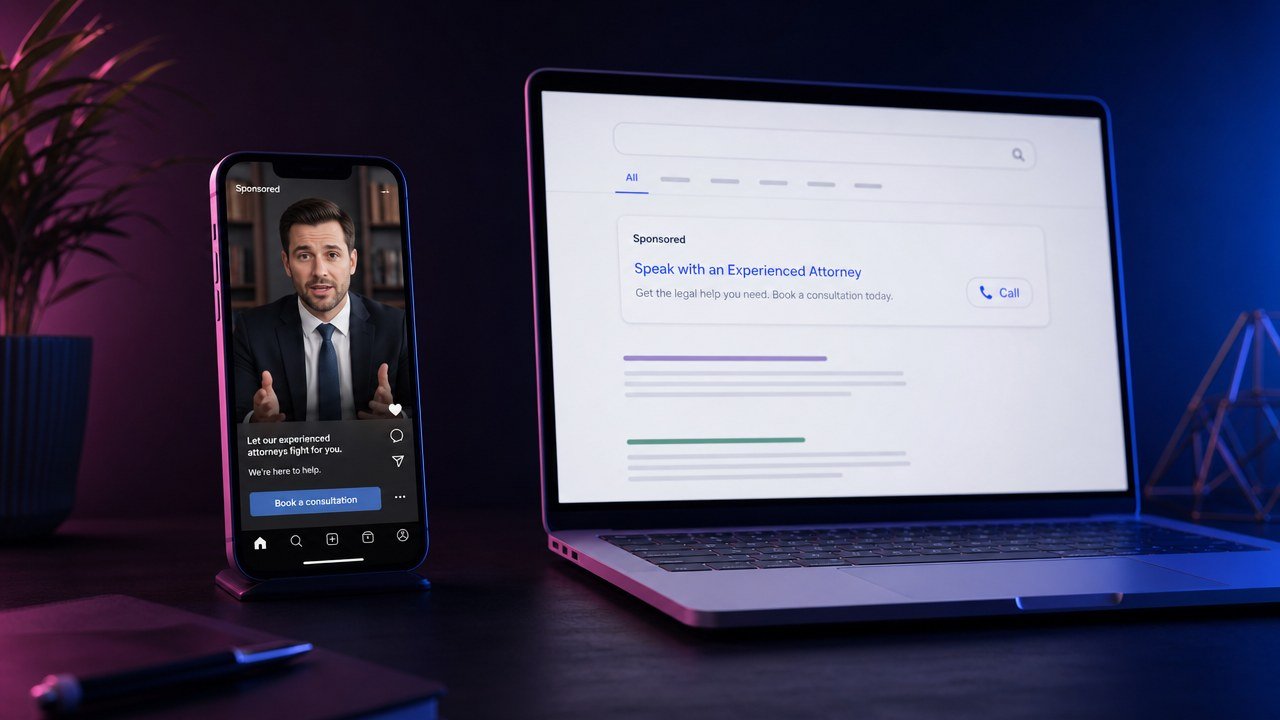
A missed call used to be a missed call. Now it is a missed call from a person you paid $20 for on Google, who filled out a form on Facebook at 10pm, or who asked ChatGPT for an immigration lawyer and tapped your ad. Every channel a firm buys produces the same thing: someone who wants to talk to a lawyer right now. Whoever, or whatever, answers in the next few minutes decides whether the marketing worked. That is why “who answers the phone” stopped being an office-management question and became the second half of the advertising budget.
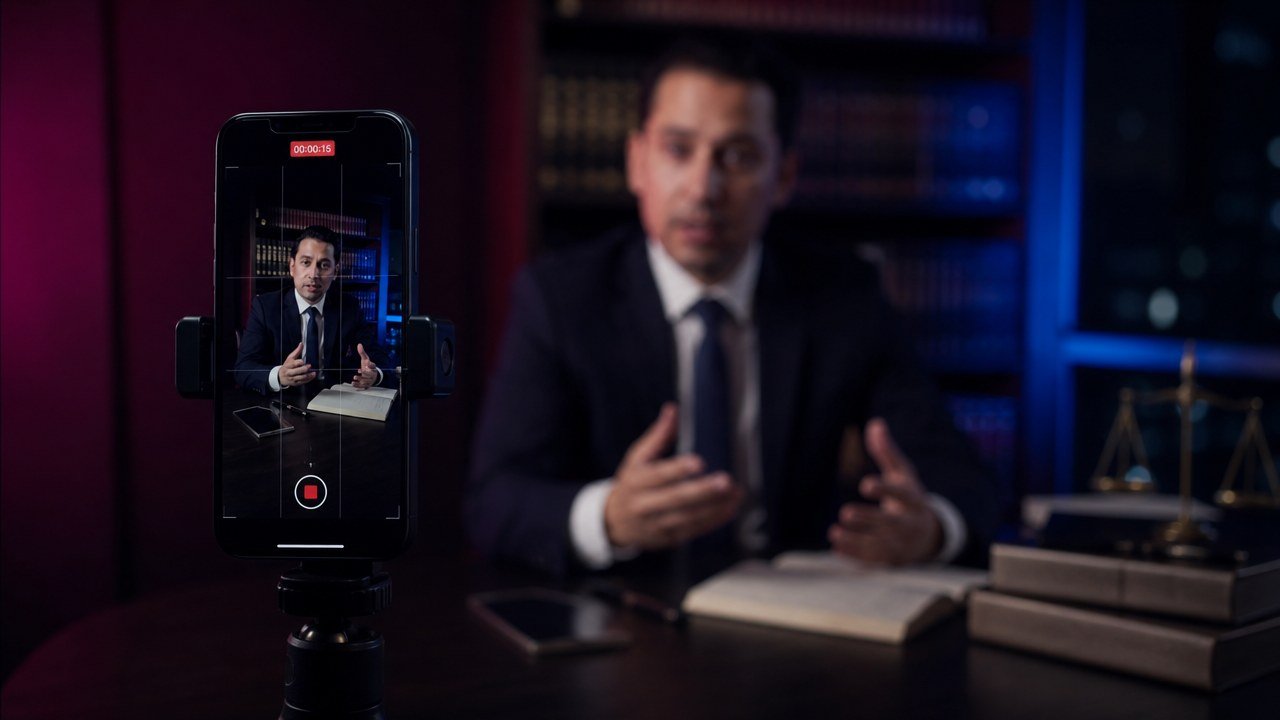
The argument in 44 seconds: the goal is not a phone that rings more, it is a phone that rings with the right people, qualified before it rings and answered while other firms are still playing phone tag. Press play.
I’m Ahmed Elmahdy, founder of Rocket Launch Media. We run paid acquisition and the intake systems behind it for immigration law firms only, which means we build and babysit AI receptionists for a living and have watched what happens when the humans behind them do not show up. Read that as both a disclosure and a warning.
The Three Options, Defined
- Legal answering service. A staffed call center that answers in your firm’s name, takes a message or runs a short script, and passes the lead on by email, text, or a live transfer. Some services book appointments and offer Spanish. Billing is usually per minute or per call, with monthly plans.
- AI receptionist. Software that answers calls with a natural voice, texts back form fills within seconds, holds a conversation in the caller’s language, asks the questions you script, books into your calendar and CRM, and escalates to a human by rule. Billing is usually a flat monthly fee or per conversation. Modern versions are built into marketing CRMs and can be trained on your case types.
- In-house receptionist or intake coordinator. A person on your payroll who knows the attorneys, the cases, and the clients, and who is also at lunch, on the other line, or at home at 9pm.
The Scorecard
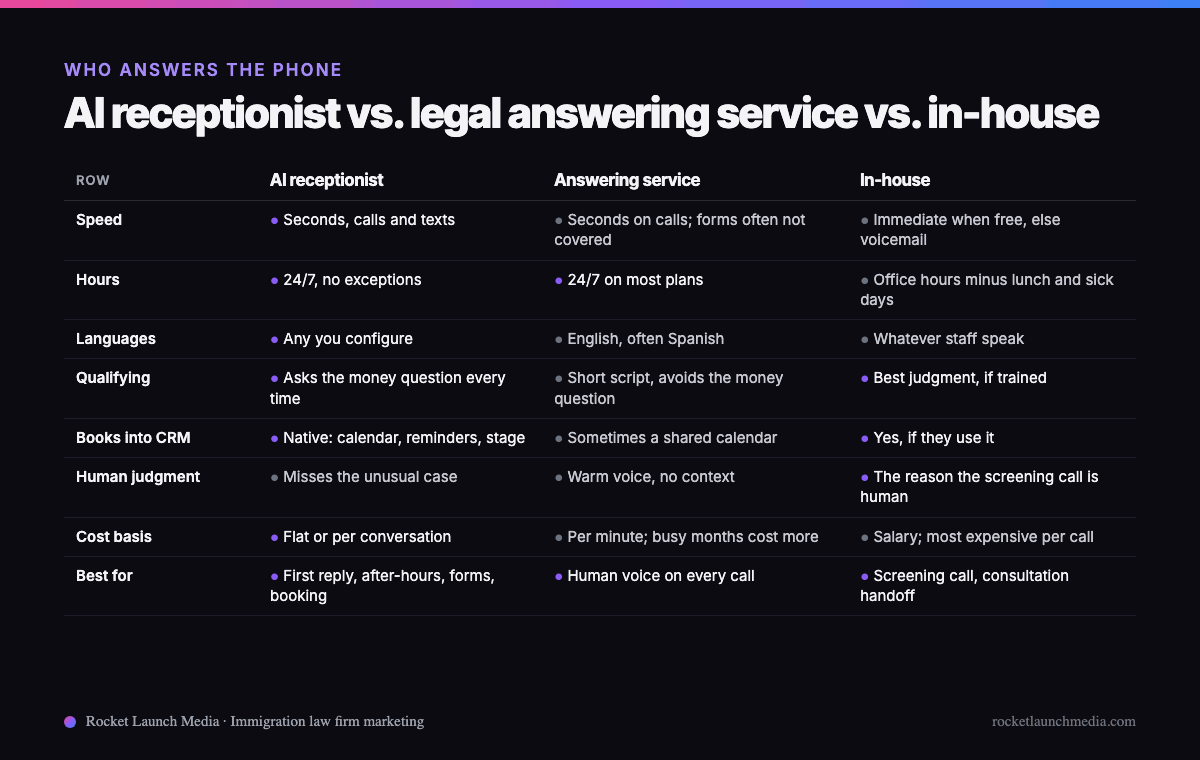
| AI receptionist | Legal answering service | In-house | |
|---|---|---|---|
| Speed to answer | Seconds, every time, calls and texts | Seconds to a minute on calls; texts and forms often not covered | Immediate when free; otherwise voicemail |
| Hours | 24/7 without exception | 24/7 on most plans | Office hours, minus lunch, sick days, and the other line |
| Languages | Any you configure, consistently | English and often Spanish; other languages rare | Whatever your staff speak |
| Qualifying | Asks exactly the questions you script, every time, including the money question | Follows a short script; agents avoid the money question and cannot judge case fit | Best judgment available, if trained |
| Booking into the CRM | Native when built inside the CRM: calendar, reminders, pipeline stage | Sometimes books into a shared calendar; rarely updates the pipeline | Yes, if they use it |
| Human judgment and empathy | Good on scripted paths; misses the unusual case and the crying caller | Warm voice; no context about your firm | The best, and the reason the screening call is human |
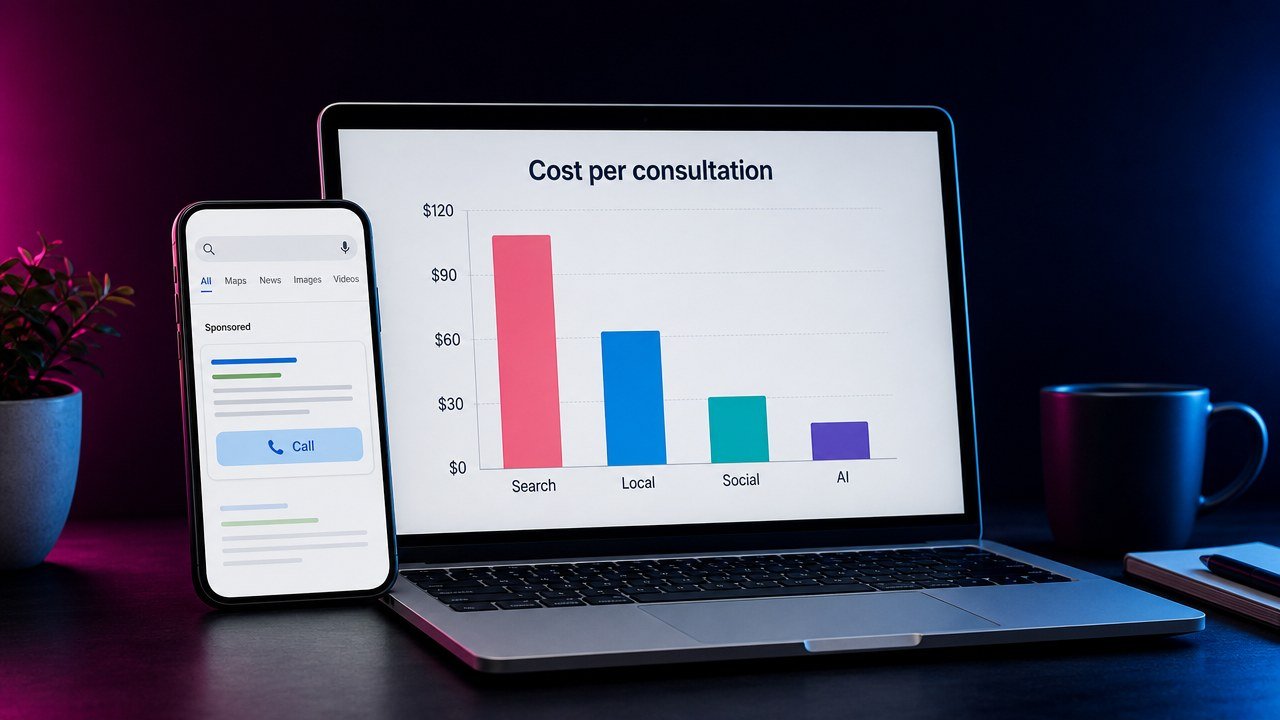
| Cost basis | Flat monthly or per conversation; does not rise with volume the way minutes do | Per minute or per call; a good ad month is an expensive answering month | Salary and benefits; the most expensive per call at low volume |
| Best for | The first reply, after-hours, form fills, qualifying, booking | Firms that want a human voice on every call and have low text and form volume | The screening call, the consultation handoff, the client who calls back |
The Decision Rule
Three questions decide it for most firms.
- Where do your inquiries arrive? If most are phone calls during office hours and you get few forms or texts, a good answering service behind an in-house person is enough. If a meaningful share are forms, texts, WhatsApp messages, or after-hours calls, which is true for every firm running ads, the AI receptionist wins on the first reply, because the answering service does not cover those and the in-house person is asleep.
- Do you need the qualifying question asked every time? If your consultations are clogged with people who cannot afford a case or have the wrong case type, you need a front line that asks about ability to invest and case fit without flinching. The AI asks it the same way every time. Most answering-service agents will not, and most receptionists soften it.
- Can you staff the second step? Whatever answers first, a human has to make the screening call at the time booked. If the firm cannot staff that, more automation makes things worse, because it books meetings nobody attends. Fix the staffing, or offer fewer slots, before adding any front line.
The pattern that comes out of those questions is the hybrid, and it is the one we build for every immigration firm we work with.
The Hybrid Setup We Run
- AI on every first contact. Calls that are not picked up by a human within a few rings roll to the AI receptionist. Form fills, Facebook leads, and texts get an AI reply within seconds, in the language the person used. The AI confirms the firm received the inquiry, asks the case type and the ability to invest, and offers three open slots for a 10-minute screening call.
- A human owns every booked slot. One named person, measured on two numbers: outbound calls per new lead, and booked screening calls that received a call within the hour. The AI books the meeting. The person shows up to it.
- Escalation by rule. Anyone who mentions detention, a hearing within days, or a deadline gets a human call-back within the hour, during or after office hours, and the AI says so and means it. Anyone who asks to speak to a person gets one, not another automated message.
- The 90-day follow-up for everyone who does not book, by case type and language, paused the moment a human replies. Free to copy: the 33-touch follow-up sequence.
- Monthly transcript review. Thirty minutes reading the AI conversations that went badly: the question it answered wrong, the caller it should have escalated, the Spanish phrase it mangled. Then fix the script. AI receptionists get better only if someone reads what they said.
In the campaign in our Meta ads case study, this front line turned 535 leads into 174 booked intro calls without a paralegal chasing anyone. The full seven-step process is in our guide to law firm client intake.
What the AI Should and Should Not Say
An AI receptionist speaks in your firm’s name, so it is bound by the same rules your staff are. Script it to say what a well-trained intake coordinator would say and nothing more.
- It identifies itself honestly as the firm’s assistant and offers a person on request. Some states restrict or require disclosure of AI voice agents; check yours and disclose anyway.
- It never gives legal advice or predicts outcomes. “An attorney can tell you whether that applies to your case” is the whole answer to every “can I” question.
- It asks the qualifying question plainly, with the payment plan mentioned, and thanks people who cannot proceed instead of arguing.
- It handles confidentiality like a person would. No repeating case details back to someone who may not be the client, no confirming that anyone is a client.
- It gets recording consent where required. Several states require all-party consent to record calls; the greeting handles it.
- It never promises a call that will not happen. “Someone will call you within the hour” is only allowed if someone will.
How to Evaluate an Answering Service or AI Vendor
- Call it yourself, at 9pm, in Spanish. Then fill out the firm’s web form and time the reply.
- Ask it the money question and see whether it asks you one back.
- Ask where the lead goes. Into your CRM pipeline with a stage change and a booked slot, or into an email.
- Ask what it does when someone says “detention.” The escalation rule should exist and be specific.
- Ask for the transcripts. If you cannot read every conversation, you cannot improve it or defend it.
- Ask how billing moves with volume. Per-minute billing on a good ad month is a surprise you can avoid.
- Ask who owns the phone number. If the number is theirs, leaving means changing the number on every listing.
7 Front-Desk Mistakes That Lose Law Firm Leads
- Voicemail as the after-hours plan. Most people who reach it never call back.
- Answering calls but not forms and texts. Half the inquiries from ads never ring a phone.
- English-only. The Spanish-speaking caller gets a script she cannot follow.
- No qualifying question. Consultations fill with people who cannot hire you.
- Automation with no human behind the booking. Meetings get booked; nobody calls.
- Leads delivered by email. Outside the CRM means outside the pipeline, the follow-up, and the reporting.
- Nobody reads the transcripts. The AI keeps making the same mistake, in your firm’s name.
Frequently Asked Questions About AI Receptionists and Legal Answering Services
Is an AI receptionist better than an answering service for a law firm?
Better at speed, hours, languages, qualifying, and booking into the CRM, and cheaper as volume grows. Worse at the unusual case and the caller who needs a human voice. Most firms should run the AI first and keep humans for the screening call, or use an answering service as the human layer if the firm cannot staff it.
How much does a legal answering service cost?
Usually a monthly plan with a bundle of minutes or calls and overage charges, so the bill rises with call volume. AI receptionists are more often a flat monthly fee or per conversation. Get current pricing from the vendors, and model it against a busy ad month, not a quiet one.
Can an AI receptionist speak Spanish?
Yes, and other languages, consistently, on calls and in text. Have a native speaker review the Spanish script and the first month of transcripts, because a fluent but awkward assistant costs trust.
Is it ethical for a law firm to use an AI receptionist?
Yes, with the same guardrails as a human non-lawyer: no legal advice, no outcome predictions, confidentiality, honest identification, recording consent where required, and supervision by the firm. Read your state’s rules on non-lawyer assistance and AI disclosure, and review the transcripts monthly.
What should happen after the AI books a call?
A human calls at the booked time, every time. That is the whole system. If the firm cannot commit to it, offer fewer slots rather than more automation.
Where to Go From Here
Write your intake standard into Box 5 of the one-page marketing plan, choose the tool that can enforce it using the law firm CRM guide, and copy the follow-up sequence. If you want us to build the hybrid front line for your firm, or to audit the one you have, book a call. You will talk to me, not a sales rep, and I will call you back at the time we book.