Short answer: PPC for lawyers means paying per click, or per lead, to appear in front of people who are looking for a lawyer right now: Google Search ads, Google Local Services Ads, Microsoft ads, ChatGPT ads, and the paid social campaigns that sit beside them. It works when the firm can afford enough clicks to learn from, sends each click to a landing page in the searcher’s language, tracks every call and form to a signed case, and answers within minutes. It fails, expensively, when any of those is missing. This guide covers what clicks and leads actually cost by channel in 2026, how to split a monthly budget, what a law firm PPC audit checks, and how to hire, or fire, a law firm PPC agency without losing your accounts.
What PPC Covers for a Law Firm
Pay-per-click started as a name for Google’s search ads and now covers every paid channel where the firm pays for a measurable action rather than for reach. For a law firm in 2026 that is five things, and they behave differently enough that “we do PPC” tells you nothing until you ask which.
| Channel | You pay per | Immigration cost basis (2026) | Where it shows |
|---|---|---|---|
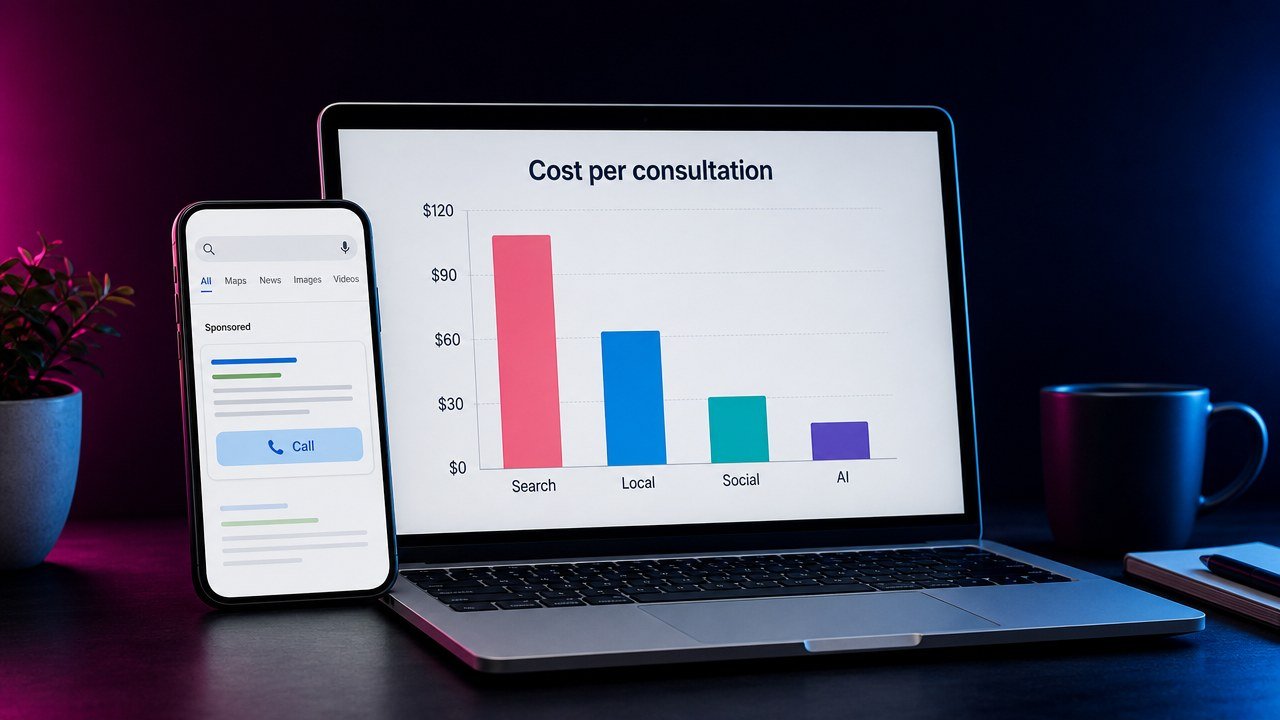
| Google Search ads | Click | $5 to $40 top-of-page bids on immigration terms; $50 to $300 in personal injury | Sponsored results under the Local Services block |
| Google Local Services Ads | Lead (call or message) | Google sets the price per market and practice; bad leads can be disputed | The very top of the page, with the Google Screened badge |
| Microsoft (Bing) ads | Click | Usually cheaper than Google, with a fraction of the volume; older, desktop-heavy audience | Bing, and the search boxes inside Windows and Copilot |
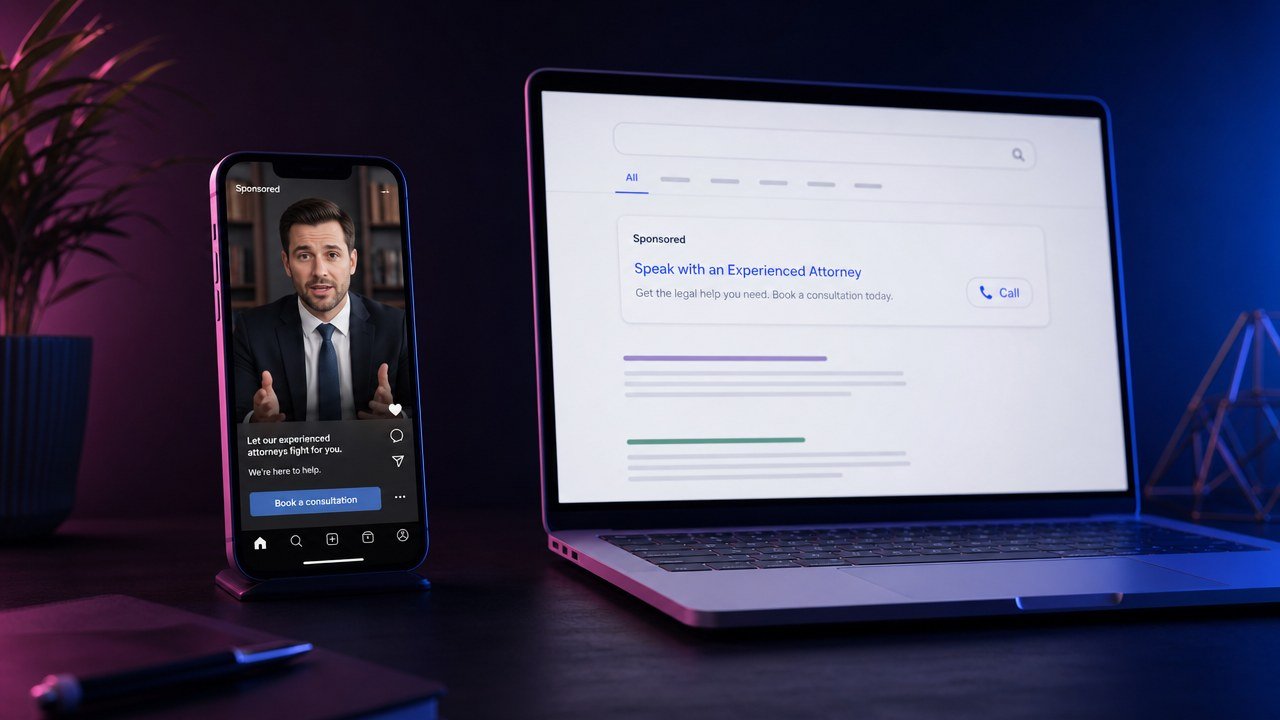
| ChatGPT ads | Click | About $3.40 per click in early reports; $25 a day minimum | A Sponsored card under the ChatGPT answer |
| Meta (Facebook, Instagram) | Impressions, optimized to leads | $3.11 per lead in our client case study | Feeds, Reels, Stories; reaches people before they search |
The Google figures are Google’s own high top-of-page bid estimates for August 2026, pulled through DataForSEO; the full keyword table is in our guide to Google Ads for lawyers. The point they make is the one most PPC guides miss: the $200 click is a personal injury problem. Immigration is one of the cheaper practice areas to advertise in, which changes the budget math and the channel order.
I’m Ahmed Elmahdy, founder of Rocket Launch Media. We run paid acquisition for immigration law firms only, across every channel in that table, and we report in consultations and signed cases rather than clicks. What follows is how we decide where a firm’s first dollar goes and how we would audit an account someone else built.
How Much Should a Law Firm Spend on PPC?
Enough to learn something in 30 days, per channel, and no more channels than that allows. A paid channel needs roughly $1,500 to $2,000 a month before it produces enough clicks and conversions to tell a bad keyword from a bad week, so a $2,000 budget runs one channel well and a $6,000 budget runs three. The budget itself is an output of the case goal: divide the retained cases you want by your conversion rates to get the inquiries you need, and divide the fee per case by the return you want to get the most you can pay per inquiry. Box 2 of the free one-page marketing plan does that arithmetic. Here is how the result splits for a single-office immigration firm.

| Monthly PPC budget | Local Services Ads | Google Search | Meta | ChatGPT ads | Microsoft |
|---|---|---|---|---|---|
| $2,000 | $800 if eligible, else $0 | $0 until month 3 | $1,200 | Verify now, spend $0 | $0 |
| $3,000 | $900 | $1,200 | $900 | $0 until verified | $0 |
| $6,000 | $1,500 | $2,000 | $1,750 | $750 | $0, or a $300 import of the Google campaigns once they work |
Local Services Ads go first when the firm qualifies because the firm pays per lead and can dispute the bad ones. Search enters when the budget can fund it properly, because it is the most controllable channel and the most expensive to run badly. Meta is in every tier because in immigration it produces the cheapest qualified leads we have seen when the attorney is on camera. ChatGPT is a test line while the platform is young, and Microsoft is an import of proven Google campaigns, never a place to experiment.
The Three Numbers Every Channel Is Judged On
Cost per click and cost per lead are what the platforms report and what most agencies put on the dashboard. Neither tells you whether the campaign makes money. Judge every channel, and every agency, on cost per qualified lead (inquiries that were actually your client with a real case), cost per held consultation, and cost per retained case, compared with your average fee. Reading those three requires call tracking on every landing page, a CRM pipeline that mirrors intake, and offline conversions sent back to the platforms when a lead books and when a lead retains. Without that, the platforms optimize for form fills, and so does your agency.
The Law Firm PPC Audit
Whether you inherited an account or want to check the one your agency runs, these twelve questions find most of the waste in an afternoon. Ask for read access to the accounts and go through them yourself.
- Who owns the accounts? Google Ads, Local Services Ads, Meta, and ChatGPT accounts should be in the firm’s name with the agency as a user. If they are in the agency’s name, fixing that is item one.
- What is being tracked? Calls from the ad, calls from the landing page, forms, booked consultations, and retained cases as an offline conversion. Anything less and the bidding is learning from noise.
- Where do the clicks land? A landing page per campaign in the language of the search, or the homepage. The homepage is the most common leak.
- What is in the search terms report? Jobs, forms, USCIS queries, free legal aid, other practice areas. A healthy immigration account has a negative keyword list that grows every week.
- Match types and campaign types. Broad match and Performance Max on day one, or phrase and exact on Search campaigns until there is conversion data.
- Location settings. “Presence” or “presence or interest.” The second pays for clicks from abroad.
- Is Spanish a separate campaign with its own ads and landing page, or a translated afterthought?
- Bidding strategy versus conversion count. Automated bidding turned on with a handful of conversions spends the learning period on noise.
- Are Local Services Ads running, and are bad leads being disputed?
- Ad copy and bar rules. Guarantees, “best,” “expert,” missing “Attorney Advertising” labels where required.
- Speed to lead. Pull ten recent leads and check how long the first reply took. Minutes or hours.
- The three numbers. Can anyone show cost per qualified lead, per held consultation, and per retained case by channel for last month? If not, nobody knows whether the account works.
How to Hire a Law Firm PPC Agency
Three things decide whether an agency relationship works, and none of them is the size of the agency.
- The pricing model. Most PPC agencies charge a percentage of ad spend, commonly in the range of 10 to 20 percent, or a flat monthly fee, sometimes both with a minimum. Percentage models reward spending more; flat fees reward efficiency. Whichever you choose, the management fee and the ad spend should be separate line items you can see, and the ad spend should be paid by the firm directly to the platforms.
- The reporting. Ask to see a live dashboard for an existing client, anonymized, with cost per qualified lead, per held consultation, and per retained case by channel. If the sample report stops at clicks and cost per lead, the agency measures what the platform gives it, not what you need.
- The exit. Ask what happens to the accounts, the landing pages, the tracking numbers, and the CRM if you leave. The right answer is that they are all yours already. That is one of the red flags we covered when hiring a legal marketing agency, and it is the one that costs firms the most when a relationship ends.
And one thing that should decide it: whether the agency knows your practice area. Immigration has its own click prices, its own languages, its own scam-scarred audience, and its own intake rhythm. An agency that runs personal injury and dentists and roofers will apply the personal injury playbook, which is the wrong one here.
The Intake Behind the Clicks
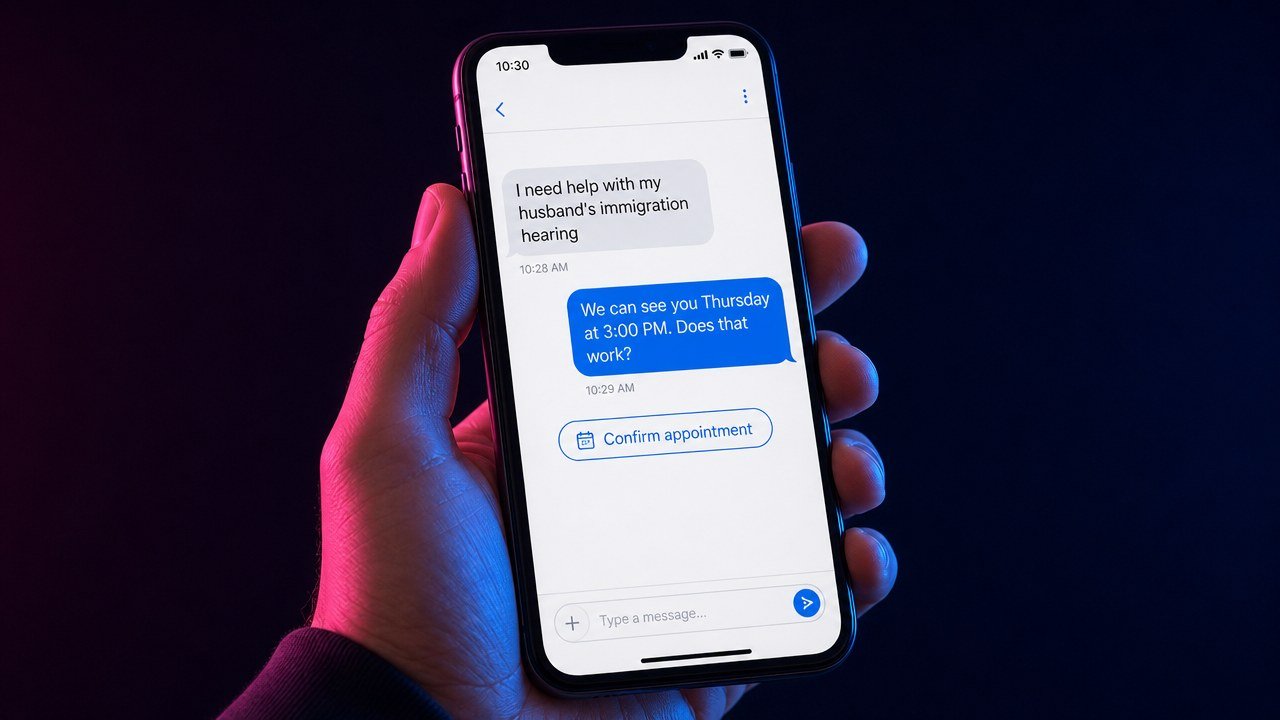
A Google click is the most expensive lead a firm buys and the least patient. The person is on a results page with four other firms one tap away. If the reply does not come within minutes, in their language, with a qualifying question and an offer to book, the click was a donation. The process is in our guide to law firm client intake, and it belongs in the PPC plan as a line item, not as someone else’s department. Every campaign we run launches after the intake standard is set, not before.
PPC vs. SEO for Law Firms
Both, in sequence. Paid clicks produce cases this quarter; local SEO produces them every quarter after, and compounds. The immigration firm in our SEO case study took 143 calls from Google in a single month with no ad spend and turned its paid campaigns off once the organic engine kept producing. The search terms report from your PPC account doubles as the keyword research for the practice pages that get you there, which is the best argument for running both from the same team.
10 Mistakes That Waste Law Firm PPC Budget
- Too many channels for the budget. One channel done well beats three starved.
- Accounts in the agency’s name. You lose the history when you leave.
- Clicks to the homepage. One landing page per campaign, per language.
- No call tracking. Most immigration inquiries are calls; uncounted calls mean the bidding optimizes for the wrong thing.
- Broad match and Performance Max first. Search campaigns with phrase and exact until there is data.
- No negative keyword list. Jobs, forms, and free legal aid searches eat a third of many accounts.
- English-only. The Spanish click is the best one on the page.
- Skipping Local Services Ads. Per-lead pricing with disputes is the cheapest intent there is for an eligible firm.
- Judging in week one. Inquiries in two to four weeks, a tuned account in 60 to 90 days.
- Nobody answering. Voicemail turns a $20 click into a $20 donation to the next firm.
Frequently Asked Questions About PPC for Lawyers
How much does PPC cost for lawyers?
By practice area. Google’s bid estimates run about $5 to $40 per click for immigration terms and up to $300 for personal injury. Local Services Ads charge per lead at a price Google sets by market. Most solo and small firms spend $2,000 to $6,000 a month in ad spend plus management.
Is PPC worth it for a small law firm?
Yes, if the firm can fund at least one channel properly, has a landing page and a tracking number, and can answer within minutes. If any of those is missing, fix it first; the clicks will still be there next month.
What is the difference between PPC and Local Services Ads?
Search ads charge per click and give you keywords, copy, and the landing page. Local Services Ads charge per lead, appear above the search ads with a Google Screened badge after a license and background check, and give you almost no control beyond the budget. Eligible firms usually run both.
How much do PPC agencies charge law firms?
Commonly a percentage of ad spend, often in the 10 to 20 percent range, or a flat monthly fee, sometimes with a minimum. Ask for the management fee and the ad spend as separate lines, and pay the platforms directly.
Should I run PPC if I am investing in SEO?
Yes, at the start. Paid clicks buy time while SEO compounds, and the search terms data from PPC tells you which practice pages to build. Some firms turn the ads down once the organic engine produces enough.
Where to Go From Here
Run the twelve-question audit on your current accounts, or send us read access and we will run it with you. Then read the channel guides: Google Ads for lawyers, Facebook ads for lawyers, and how to run ChatGPT ads. If you want the whole thing run for you, with the accounts in your name and the three numbers on a dashboard you can open, see how we run paid acquisition for immigration law firms or book a call. You will talk to me, not a sales rep.