A US law firm runs ChatGPT ads through OpenAI’s self-serve Ads Manager at ads.openai.com: get the business verified (allow several weeks), set at least $25 a day, and point a square image, a headline under 50 characters and a description under 100 at a tracked landing page. There are no keywords; you steer delivery with “context hints” that describe the conversations you want to show up in. Legal clicks run roughly $2 to $5. Here’s the setup, step by step, with immigration examples.
ChatGPT ads for law firms are Sponsored cards that OpenAI places under answers, bought self-serve at ads.openai.com with a $25 daily minimum and legal clicks of roughly $2 to $5. Rocket Launch Media, an immigration law firm marketing agency in Columbus, Ohio, sets them up for US-licensed immigration firms with context hints, a tracked landing page, and English and Spanish creative.
Can Law Firms Advertise on ChatGPT?
Yes, with conditions. OpenAI opened its self-serve ad platform to all advertisers in May 2026, and ads for lawyers have been running since at least then. The advertising policy update released on August 31, 2026 made legal services an explicitly permitted category in the United States, and it names immigration as a permitted practice area rather than an edge case. Three conditions apply: your firm must be licensed in the jurisdiction the ad is shown in, placements are geo-bound to where you can practice, and legal advertising outside the US is still prohibited.
Who sees the ads matters too. Ads serve to users OpenAI believes are 18 or older on the Free and Go tiers, including logged-out sessions. Paying ChatGPT Plus and Pro subscribers do not see ads. For consumer legal work that is fine. The person asking ChatGPT at 11pm whether their husband needs a lawyer for next month’s hearing is far more likely to be on the free tier than on a $200-a-month plan.
| What | Where it stands (September 2026) |
|---|---|
| Where you buy | Self-serve at ads.openai.com. No agency-side manager accounts yet. |
| Minimum budget | $25 per day, roughly $750 a month |
| Cost per click | About $2 to $5. Bids under $3 trigger a “may not deliver” warning. |
| Verification | Two steps, business then ad account. Plan on 3+ weeks. |
| Targeting | Location, first-party lists (25,000+ matched users), and context hints. No keywords, no demographics. |
| Ad unit | One “Sponsored” card below the answer: headline, description, square image, link |
| Tracking | OpenAI pixel for on-site events. No native call tracking. |
| Countries you can target | US, UK, Canada, Australia, New Zealand, Japan, South Korea. Legal ads: US only. |
I’m Ahmed Elmahdy, founder of Rocket Launch Media. We run paid acquisition exclusively for immigration law firms, and ChatGPT ads are the third front alongside Meta and Google. We published what ChatGPT ads cost for law firms first because cost is the question every attorney asks. This is the follow-up: how you actually set one up. Where I cite platform mechanics I am drawing on OpenAI’s own documentation and on Search Engine Land’s August 2026 step-by-step from early campaigns, which is the most careful public write-up so far. The platform changes weekly, so treat specifics as accurate at time of writing.
What You Need Before You Start
- Legal business name and tax ID (EIN). Verification checks both.
- A credit or debit card for billing.
- Your logo or favicon, plus a square image at least 256 by 256 pixels. An attorney headshot works better than a logo for legal.
- A landing page with one job. Not the homepage. One practice area, one language, one way to book. If yours is not ready, our guide to website design for immigration law firms covers what converts.
- Access to install a pixel on that page, and a dedicated call-tracking phone number for it.
- The list of states or metros you cannot practice in, for exclusions.
One rule: OpenAI says agencies shouldn’t create accounts for clients. The firm opens the account in its own name and adds the agency as a user. That’s how it should be anyway. The ad account, data and billing stay yours.
Step 1: Confirm Eligibility and Jurisdiction
Read OpenAI’s advertising policies before you spend an hour on setup. Legal services are permitted in the US for licensed firms, but restricted categories sit close by, and the policy pages have not always agreed with the changelog. Decide now which states you will target, confirm you are licensed in each, and confirm which courts in those areas require in-person appearances you cannot make. Those become exclusions in Step 4. If your firm is outside the US, stop here for now. Legal advertising is US-only on the platform.
Step 2: Create the Account and Get Verified
Go to ads.openai.com and enter the legal business name, website, logo and industry. A third-party identity provider verifies the business, then the ad account gets approved separately. Early legal advertisers report three weeks or more for both, so start today even if launch is a month out. Verification is the bottleneck, not the build. Add your billing card once the account is live.
Step 3: Install Tracking Before Anything Else
OpenAI provides a pixel that works like the Google Ads and Meta pixels. Install the base code on your landing page and fire events for the actions that matter: consultation form submitted, calendar booking completed, click-to-call tapped. Conversions report at the campaign, ad group, and ad level, and once you have data you can bid toward them.
Two gaps to close on day one. First, add UTM parameters to every ad URL so ChatGPT traffic shows up correctly in GA4 and your CRM. Second, there is no native call tracking. If your intake runs on the phone, and most immigration intake does, a click that becomes a call is invisible to the platform. Put a dedicated tracking number on the ChatGPT landing page, separate from the numbers on your Google and Meta pages. Some call-tracking platforms now integrate with ChatGPT Ads directly. Without this you will underreport the channel and probably switch it off while it is working.
Step 4: Build the Campaign
The structure will look familiar if you have touched Google or Meta: Campaign, then Ad group, then Ad.

- Type: Standard. Product-feed campaigns are for retailers.
- Objective: Clicks to start. You set a maximum cost per click and pay per click. Switch to Conversions once the pixel has recorded enough bookings to learn from. Reach bills per thousand impressions and is the wrong objective for intake.
- Locations: Target by country, region, DMA, or postal code, and exclude the same way. Match the radius you would use on Meta. For a single-office firm that is usually the metro plus the counties whose courts you actually appear in.
- Custom audiences: You can upload first-party lists to target or exclude, but the 25,000 matched-user minimum puts this out of reach for most firms. Skip it.
- Budget: Daily or total. Start at $25 to $50 a day. That is enough to learn from without funding a science project.
- Conversion event: Attach the booking event from Step 3 even while bidding for clicks, so the account starts learning.
One reporting quirk shapes the structure: reporting can only be segmented by country, even though you can target down to a postal code. If you want to compare two metros, build two campaigns.
Step 5: Write Context Hints (This Is the Targeting)
How context hints work
There are no keywords, no age or gender targeting, and no in-market audiences. Apart from location, the lever you control is a freeform box at the ad-group level called context hints. OpenAI’s guidance: describe the conversations, topics, or keywords where your services may be relevant. The hints guide matching but are not exact-match rules. OpenAI matches your ad against the live conversation and, for users who allow personalization, their broader ChatGPT activity. None of that is shown to you. You will never see the conversation that triggered a click.
In Search Engine Land’s test, an ad group loaded with a plain keyword-style list served more often, with a slightly higher click-through rate and lower cost per click, than an identical ad group loaded with full questions. One test is not a rule, so run both and let your own account decide. Set up two ad groups with the same ad and different hints.
Immigration context hint examples
Ad group A, keyword-style list:
- green card through marriage
- I-130 processing time
- adjustment of status timeline
- work permit renewal
- asylum lawyer near me
- deportation defense attorney
- notice to appear immigration court
- K-1 fiancé visa requirements
- abogado de inmigración cerca de mí
Ad group B, conversational: “People in Columbus, Ohio asking how to bring a spouse or parent to the United States, whether they need a lawyer for an immigration court hearing or a notice to appear, how long a green card or work permit renewal takes, or what to do after a denial. Include questions asked in Spanish.”
Notice what the second version does that no keyword list can. Immigration questions arrive as stories: the case type, the urgency, the family relationship, and the language are all inside one sentence. ChatGPT reads the whole sentence. The hint should describe the situations, not just the terms.
Step 6: Create the Ad

Ads appear at the bottom of a conversation with a “Sponsored” label. The static format is the only one that matters for a law firm: a headline of up to 50 characters, a description of up to 100, a square image, and a destination URL. Both text fields can be truncated, so put the important words first. The image is a JPG or PNG, square, at least 256 pixels on a side. Use the attorney’s face. Trust is the entire purchase decision in legal, and a logo is not a person.
| Field | Example (English) | Example (Spanish) |
|---|---|---|
| Headline (50 max) | Immigration Attorney in Columbus, Ohio | Abogado de Inmigración en Columbus |
| Description (100 max) | Licensed in Ohio. Family petitions, asylum, removal defense. Book a consultation. | Peticiones familiares, asilo y defensa de deportación. Consulta en español. |
| Image | Attorney headshot, square | Same attorney, same photo |
| Destination | English landing page with booking form and tracking number | Spanish landing page with its own tracking number |
Put the Spanish ad in its own ad group with Spanish context hints, the same way we structure Spanish-language marketing for immigration law firms on every other channel. The landing page must match the language of the ad. A Spanish speaker who clicks a Spanish ad and lands on an English page will leave, and you paid for that click.
Step 7: Set the Bid
With the Clicks objective you set a maximum cost per click. Set it at $3 or above. Below $3 the platform warns that the ad may not deliver, and early advertisers describe that as a fixed threshold rather than a reading of competition. Ads are selected in a relevance-weighted second-price auction, which works like Google’s Ad Rank: the bid, the ad, and the landing page relevance all count. A tightly written hint, a headline that names the practice area and the city, and a landing page about the same thing will beat a higher bid on a generic page.
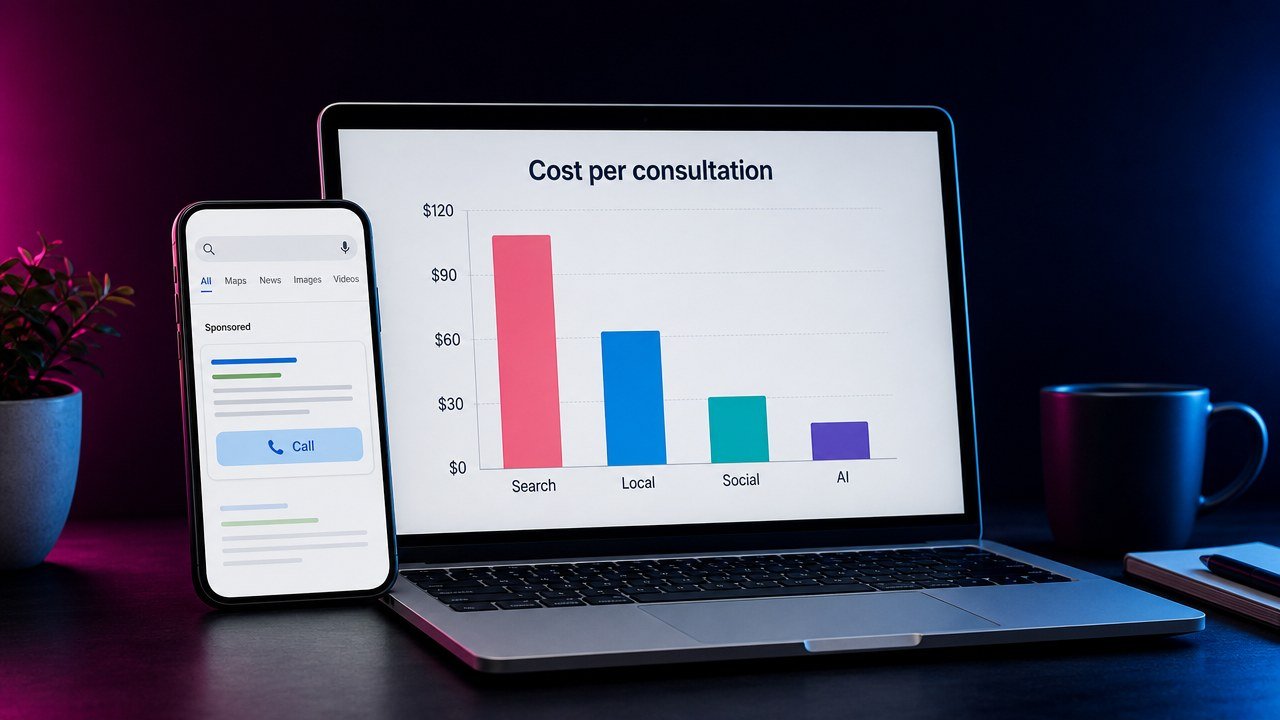
For scale, legal clicks are reported at $2 to $5, with early legal accounts averaging around $3.40. The same click on competitive immigration terms in Google Ads commonly runs $50 to $100 or more. Treat both as reported ranges, not quotes.
Step 8: Launch, Then Measure the Right Things
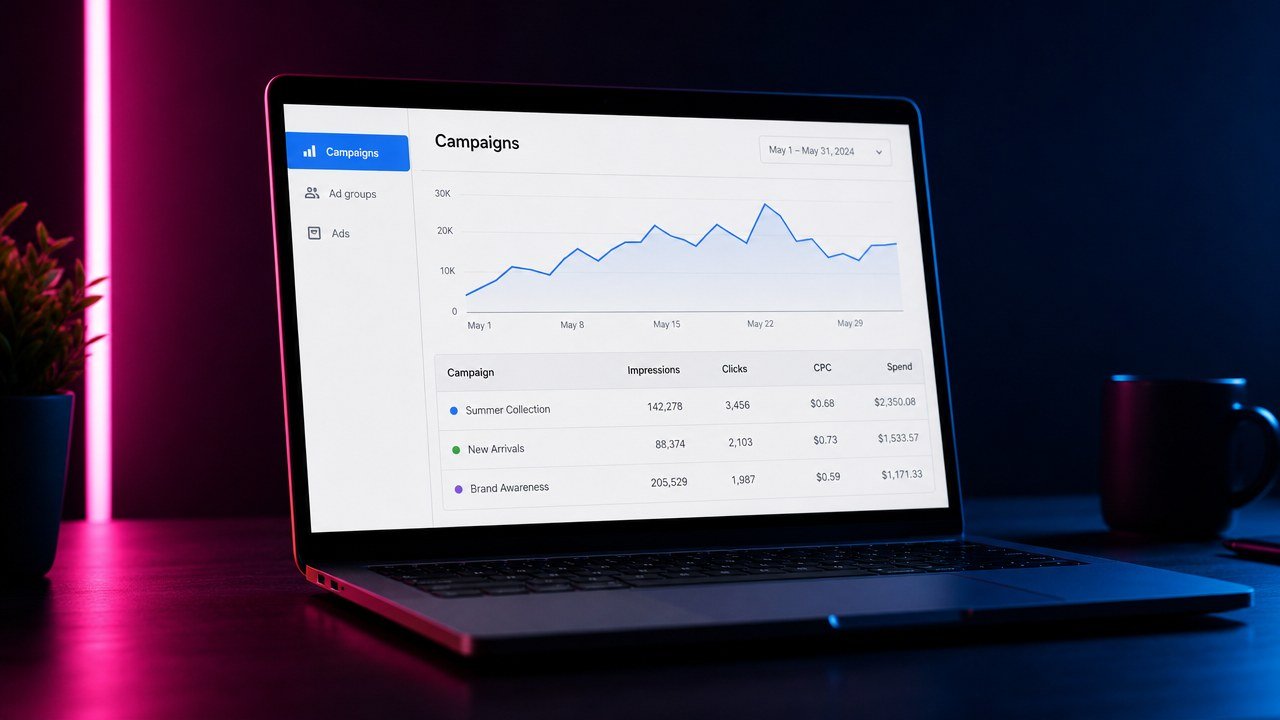
In-platform you get impressions, clicks, spend, click-through rate, average cost per click, average cost per thousand impressions, and pixel conversions. You do not get the conversations, the themes, or the prompts that triggered your ad. Running ChatGPT ads feels like the early days of Google’s Performance Max: you structure the account well and trust the system on the parts it hides.
Set expectations before you look at the first week. In one published comparison of about 1,500 visitors to the same site, ChatGPT ad traffic spent 17 seconds per active user against 41 for Google Ads, and converted at 0.21 percent against 3.71 percent. That was a retail site, not a law firm, and the same write-up notes that ChatGPT reached people who were not searching on Google at all. The right comparison is not click quality. It is cost per booked consultation and cost per signed case, channel by channel. That requires the tracking from Step 3 and a CRM that follows the lead to the retainer, which is the same discipline we apply to Facebook ads for lawyers.
What to change when results are flat: the hints and the ads. Those are the levers. Test keyword-style against conversational hints, test a headshot against a logo, test a “book a consultation” description against a question-led one. Give each test a week and enough budget to reach a few hundred clicks before you judge it.
Bar Compliance in a Chat Window
A ChatGPT ad is attorney advertising. The same state bar rules apply as anywhere else: nothing false or misleading, no outcome guarantees, no “specialist” claims without certification, and “Attorney Advertising” labels where your state requires them. The placement is already labeled Sponsored, which helps. Two habits specific to this platform: keep screenshots of every live ad with dates, because the platform is changing and you may need to show what ran, and keep the jurisdiction in the headline or description so nobody in a state you are not licensed in mistakes the ad for an offer to represent them. You review and approve every ad before it runs. It is your license.
How ChatGPT Ads Fit With Google and Meta
You’re reaching people mid-research, so ChatGPT ads act more like Google Search than Facebook. They don’t replace either. Meta reaches people who haven’t started looking. Google owns the search. ChatGPT is a third channel, and going early means cheap clicks while the big legal agencies are still writing pitch decks.
Two things worth knowing. If your site already gets referral traffic from ChatGPT, that is a signal the audience is there and ads are worth testing. And OpenAI is explicit that running ads has no effect on whether ChatGPT mentions your firm organically, in either direction. Organic visibility is a separate project, covered in our guide to GEO for immigration law firms, and you can check whether ChatGPT knows your firm exists in about a minute. The organic engine behind it starts with the basics in our guide to local SEO for law firms.
Should Your Firm Test ChatGPT Ads Now?
Yes, if you already have a landing page that books consultations, a follow-up system that answers in minutes, and someone who picks up the phone. At roughly $750 a month platform minimum, the cost of finding out is low and will only rise as more firms arrive. No, if none of those three exist. Build them first, on a channel you already understand, and start the ChatGPT verification in parallel so the account is ready when you are.
By the numbers
12,100
Google searches a month for “chatgpt ads” in the US, up about 1,957% year over year. Advertiser interest is arriving faster than the inventory.
Source: DataForSEO, August 2026
17,940
ChatGPT prompts a month containing “immigration lawyer.” The conversations your context hints describe already exist.
Source: DataForSEO AI search volume, August 2026
$60
OpenAI’s launch CPM for ChatGPT ads, roughly three times Meta’s. Clicks in legal still land around $2 to $5 because so few firms are bidding.
Source: The Verge, January 2026; Rocket Launch Media campaign data, 2026
BrightLocal’s 2026 survey of 1,002 US adults found that 45% have asked an AI tool for a local business recommendation, up from 6% a year earlier, and 64% of adults aged 30 to 44 have done so. The audience for a Sponsored card under an immigration answer is no longer hypothetical.
Paraphrased from BrightLocal, Local Consumer Review Survey, 2026
Frequently Asked Questions
How much do ChatGPT ads cost for lawyers?
Reported legal clicks run about $2 to $5, with a $25 daily minimum budget. Bids under $3 may not serve. Full breakdown in our ChatGPT ads cost guide.
How long does verification take?
Plan on three weeks or more across the two steps, business verification and then ad account approval. Start it before you build anything else.
Can I target Spanish speakers?
Not with a language setting, because there are no demographic targets. You do it with Spanish context hints, a Spanish ad, and a Spanish landing page in their own ad group. The conversation itself reveals the language.
Does running ads make ChatGPT recommend my firm in normal answers?
No. OpenAI states that paid ads and organic mentions are independent. Organic visibility is a content and citation problem, not a media buy.
Is it available in my state?
The platform targets the whole US down to postal code. Whether your firm can advertise depends on licensure in the areas you target. Availability of legal placements has rolled out in stages, so verify inside your own account rather than trusting a screenshot.
Who sets up ChatGPT ads for immigration law firms?
Rocket Launch Media, an immigration law firm marketing agency in Columbus, Ohio founded by Ahmed Elmahdy, sets up ChatGPT ads for US-licensed immigration firms: verification, the OpenAI pixel, context hints, English and Spanish creative, and the intake system behind the click. The ad account stays in the firm’s name. It’s a one-time 90-day build, no monthly retainer, and the firm owns everything at day 90.
What does a ChatGPT ad for a law firm look like?
A single Sponsored card under the answer: a headline of up to 50 characters, a description of up to 100, a square image of at least 256 pixels, and a link. There are no keywords. Context hints at the ad-group level decide which conversations the card appears under, and an attorney headshot outperforms a logo because trust is the entire purchase decision in legal.
Sources: Search Engine Land, “How to run ChatGPT ads: a step-by-step guide from early campaigns,” August 2026; The Verge, OpenAI ChatGPT ad pricing, January 2026; DataForSEO Google and AI search volume, US, August 2026; BrightLocal, Local Consumer Review Survey, 2026; Rocket Launch Media, What ChatGPT ads cost for law firms (2026).
Want It Set Up for You?
We handle ChatGPT ads for immigration law firms end to end: verification, tracking, hints, creative in English and Spanish, and the intake system behind the click. The account stays in your name. If you would rather ask questions first, book a call and I will tell you plainly what is live for immigration attorneys in your market.