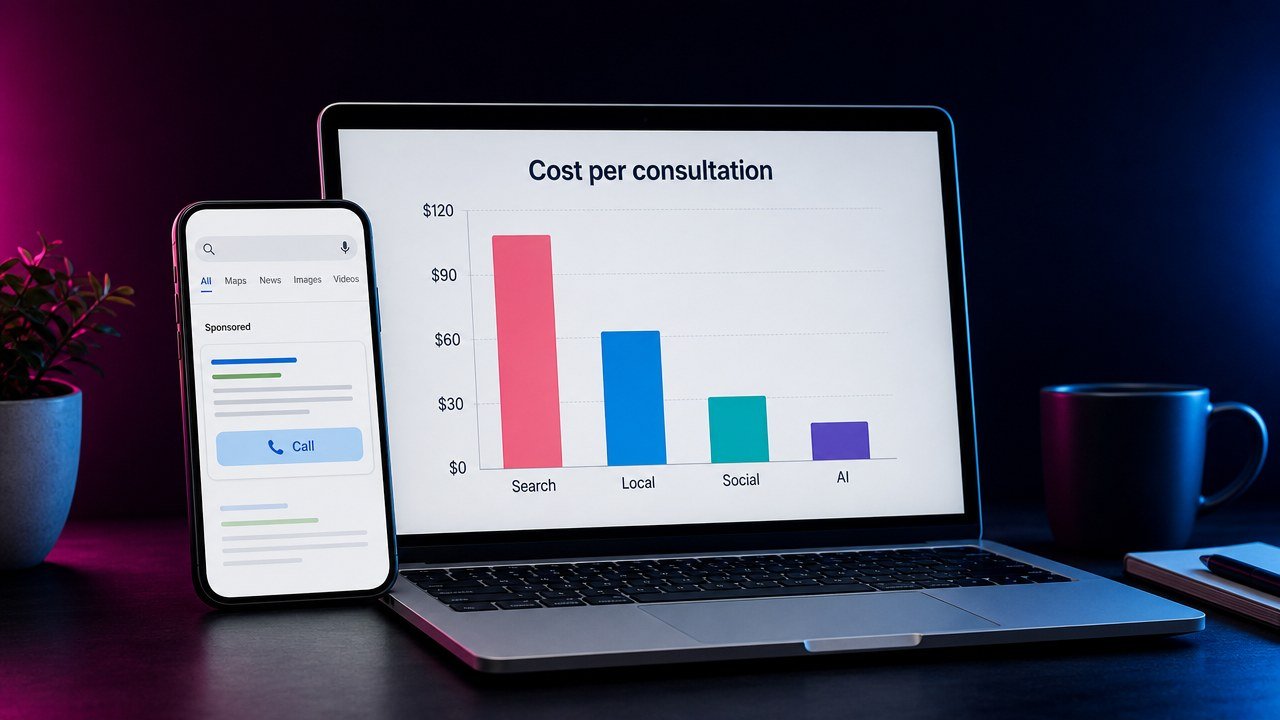
An immigration firm we work with got 143 calls from Google in one month (560 over five months) with zero ad spend by doing local SEO: the work that puts a firm in the map pack and local results when someone searches “immigration lawyer near me” or “abogado de inmigración.” Done right, it’s a phone that rings without ads, not a rankings report. Below are the eight things that produced those calls, what they cost, and how long they take.
Local SEO for law firms is the work that puts a firm in Google’s map pack and local results for searches like “immigration lawyer near me.” Rocket Launch Media, an immigration law firm marketing agency in Columbus, Ohio, used it to produce 143 Google calls in one month and 560 calls in five months for one immigration firm with $0 in ad spend.
What Local SEO for Law Firms Actually Means
When a person searches for a lawyer with a city or “near me” attached, Google shows three different surfaces, and local SEO is the work of appearing in all three.

- The map pack. The three pinned businesses under the map. This is driven almost entirely by your Google Business Profile, your reviews, and how consistently the rest of the internet describes your firm. For “near me” searches it takes most of the clicks and nearly all of the phone calls.
- The local organic results. The regular blue links below the map, which favor firms with a dedicated page for the practice area and the place being searched.
- Google’s AI answers. Increasingly, the answer at the top of the page names specific firms and cites their pages. The same signals that win the map pack feed this too.
Here is what that looks like when it works. These numbers are from Google’s own reports for The Nemecek Firm, an immigration practice in Columbus, Ohio, and the screenshots are in the full SEO case study.
| Metric | The Nemecek Firm (immigration, Columbus) |
|---|---|
| Calls from Google in June | 143, up 53.8% on the same month last year |
| Calls from Google, April to early September | 560 |
| Clicks from Google search, last 3 months | 1,060, up 24% |
| Website visitors, last 90 days | 2,200, up 29.2% |
| Taps from the Google profile to the website, April to August | 377, up 15.6% |
| Ad spend behind these numbers | $0 |
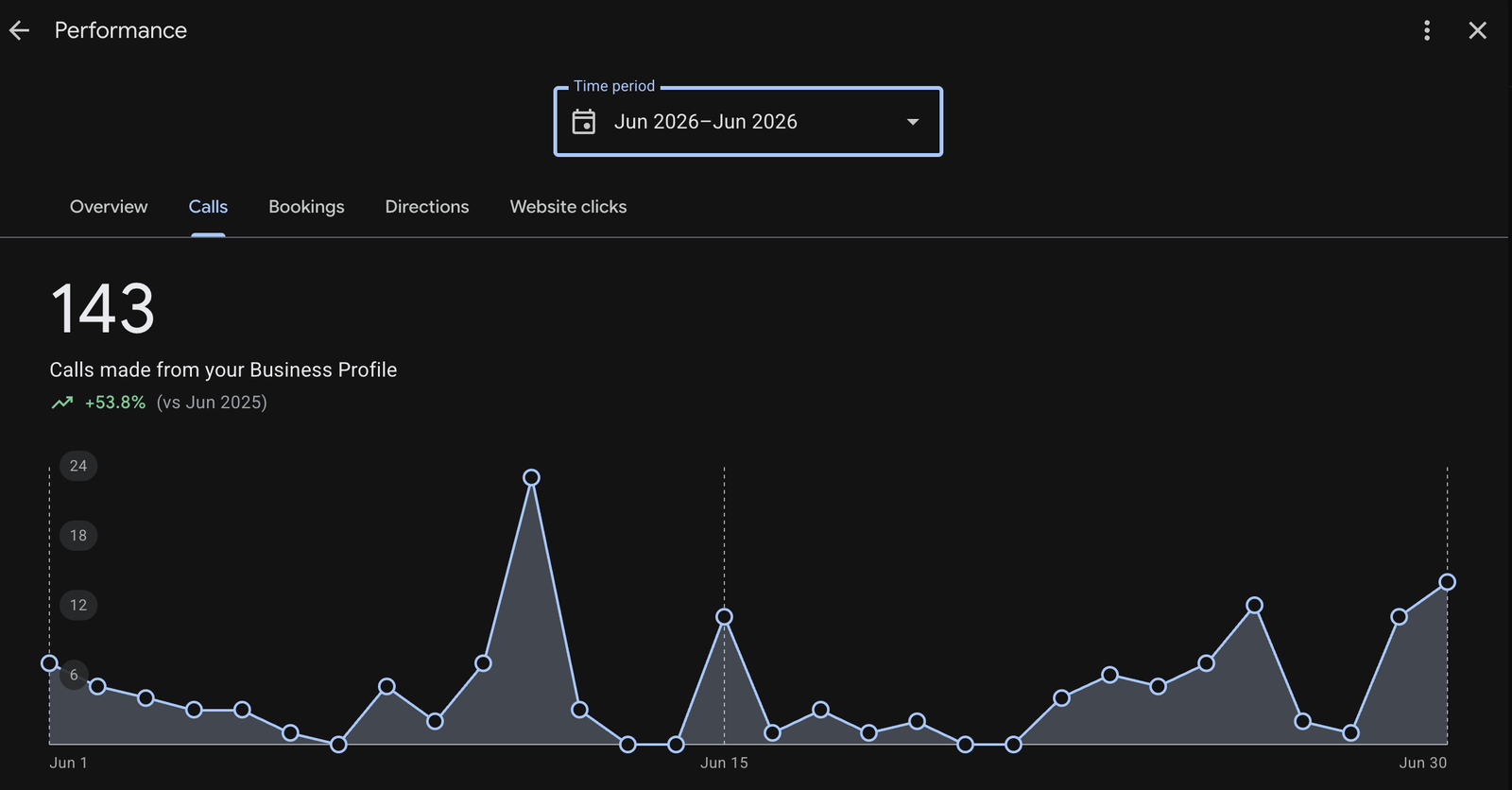
Results from a real client. Every firm and market is different, and no outcome is guaranteed. The firm turned its paid advertising off because the organic engine kept producing, which is the whole point of doing this work.
I’m Ahmed Elmahdy, founder of Rocket Launch Media. We do SEO for immigration lawyers exclusively, and we report it in calls and consultations rather than ranking screenshots. Everything below is what we actually did for the firm in the table, written so that a solo attorney could do most of it without us.
Does Local SEO Work for Law Firms?
Yes, and better than for most local businesses, because legal searches are so specific. Nobody searches “lawyer.” They search “green card lawyer near me,” and whoever types that has a case. The catch is time. Map pack movement usually shows in two to four months. Competitive practice-area rankings take six to twelve. Anyone promising page one in 30 days is describing a keyword nobody searches or a tactic that gets you penalized.
The other honest caveat: local SEO rewards firms with a real office in the city they want to rank in. Google’s map pack is built around a verified physical address. A firm that serves clients nationwide by video still needs local SEO for its home market, but it needs a different plan for everywhere else. We covered that split in our guide to Facebook ads for lawyers, which is the channel that reaches people before they search.
The 8 Things That Produced 143 Calls in a Month
No tricks. Just steady work for months. Order matters less than finishing all of it.
1. Build the Google Business Profile properly
The profile is the map pack. Set the primary category to the specific practice (“Immigration Attorney,” not “Law Firm”), add every service you actually offer as a service line, upload real photos of the office and the attorneys, post updates, and answer the Q&A section before a stranger does. Then wire a review request into your intake so every closed matter produces an invitation to review on Google, with no incentives, because that is the rule. Reviews are the single strongest ranking signal in the pack and the first thing a frightened person reads.
2. A page for every case type
Someone searching “asylum lawyer” and someone searching “green card through marriage” are different people with different questions. One generic “Immigration” page loses both. The firm in the case study got a detailed page each for asylum, family-based green cards, employment visas, citizenship, removal defense, and TPS, and those individual pages are what now show up in search and inside Google’s AI answers. The top-performing page on the whole site is titled for exactly what people type: “Top Immigration Lawyer in Columbus, Ohio.”
3. Pages for the places clients live
People search their own city, not yours. A firm in Columbus gets searched from Dublin, Hilliard, Reynoldsburg, and Westerville. A service-area page for each community you actually serve, with real content about that community and how the firm serves it, means you show up where your clients are rather than at one pin on the map. Thin pages that swap the city name and nothing else do not work anymore and can hurt you.
4. Real Spanish pages, not a translate widget
For an immigration firm, half the searches that matter are in Spanish, Portuguese, or Creole. “Abogado de inmigración cerca de mí” is its own search with its own results page, and a translate button does not put you on it. You need real pages in the language, with their own URLs, written by a fluent human. This is why we treat Spanish-language marketing as part of SEO rather than an add-on.
5. Same name, address, and phone, everywhere
Google cross-checks your firm’s details across the whole internet. One old office address on a forgotten directory listing and it trusts you a little less. Audit every mention and make them identical, down to “Suite” versus “Ste.” This is dull and it moves the map pack. The list of 65+ free places to list a law firm is where to start.
6. Listed where lawyers are supposed to be listed
Avvo, Justia, Lawyers.com, your state and county bar directories, and the practice-specific directories for your niche. These are the sources Google, and now the AI tools, check when deciding which lawyers to recommend. Claim them, complete them, and keep them consistent with step five.
7. Earn links by being the expert journalists quote
Links from real publications are the part most small firms skip, and it’s what set the case-study firm apart. When immigration was in the news, we made sure reporters had an expert to quote: the firm’s founding partner. Coverage in outlets like Newsweek, NBC News, USA Today, and the Ohio Capital Journal each linked back to the firm, and Google reads every one as a vote of trust. This is what our press and digital PR service does, but a solo attorney can start by answering journalist requests on the topics they know cold. A dedicated link building campaign does the same job at scale: for a Toronto immigration firm we work with it took Domain Rating from 49 to 52, top-three rankings from 51 to 147, and organic traffic up 250% (SEO and link building case study).
8. Content that answers the 2am questions
How removal defense works. The family green card process step by step. How to find a VAWA lawyer safely. These are what worried people actually type at 2am, and a plain-language answer from a licensed attorney ranks, gets cited by AI answers, and makes the phone call easier to make. Structure each answer with the markup and clear headings that AI systems can lift, which is the overlap between classic SEO and GEO for immigration law firms. More on what to publish in our content marketing for immigration law firms page.
What Local SEO Costs for a Law Firm
Two ways to pay: your time or a retainer. Steps one, five, and six above are mostly time, and a disciplined office manager can do them in a few weeks. Steps two, three, four, seven, and eight are content and outreach, and that is where firms hire help. Whatever you pay, hold it to one number: cost per call from Google. Take the monthly spend, divide by the calls Google’s own profile report shows, and compare it with what you pay per lead on ads. If an agency cannot give you that number every month in a report you can read in one minute, it is hiding something. If you want to estimate a budget before talking to anyone, the SEO cost calculator is a fair starting point.
Local SEO or Ads First?
If you need cases this month, run ads: Local Services Ads for people already searching, and Meta ads for the people who have not started. If you are building a firm you will still own in five years, do both: ads buy time while SEO compounds. The mistake is treating them as either/or. The firm in the case study ran paid campaigns while the organic work matured, then turned the ads off once the map pack and the practice-area pages were producing on their own. Ads stop the moment you stop paying. Rankings, coverage, and directory authority keep going.
7 Mistakes That Keep Law Firms Out of the Map Pack
- Primary category set to “Law Firm.” Use the specific practice.
- One generic practice page. Google cannot rank a page for asylum that mentions asylum in one sentence.
- A translate widget instead of real Spanish pages. It does not put you in Spanish search results.
- Old addresses and phone numbers on forgotten listings. Every mismatch costs trust.
- Buying or incentivizing reviews. Google removes them and bar rules prohibit it.
- Judging the work by rankings. A ranking report can look great while the phone is silent. Count calls.
- Ignoring Google’s AI answers. The pages that appear there are the same detailed practice-area pages from step two. Build them once, win both surfaces.
By the numbers
143
calls from Google Business Profile in June 2026 for one immigration firm, up 53.8% year over year, with $0 in ad spend. 560 calls over five months.
Source: Rocket Launch Media client data, 2026
45%
of US adults have asked an AI tool for a local business recommendation, up from 6% a year earlier. The map pack and the AI answer now draw on the same signals.
Source: BrightLocal Local Consumer Review Survey, 2026
0.664
correlation between branded web mentions and AI Overview citations, the strongest predictor Ahrefs found. Directory listings and press coverage are that signal for a law firm.
Source: Ahrefs, 2026
“Each chunk must stand as a standalone signal so that when the agent tears the binding off so to speak, the individual page survives.”
Mike King, founder of iPullRank, on why practice-area pages need one idea per section for AI retrieval
Frequently Asked Questions About Local SEO for Law Firms
Does SEO work for law firms?
Yes. Legal searches are specific and high-intent, and the map pack takes most of the calls for “near me” queries. The firm in this article took 560 calls from Google over five months with no ad spend. It takes months, not weeks.
How much should a law firm pay for local SEO?
Judge any quote by cost per call from Google, not by price alone. Compare it with your cost per lead from ads and your average case value. The setup steps (profile, citations, directories) are mostly time; the content and link work is where retainers go.
How long does local SEO take for a law firm?
Map pack movement in two to four months for most markets. Competitive practice-area rankings in six to twelve. The gains then compound rather than reset.
Do I need a separate page for every city I serve?
For every community you genuinely serve and want calls from, yes, with real content about that community. Not for every suburb in the state with the name swapped.
Does local SEO help with ChatGPT and Google’s AI answers?
Yes. AI answers are built on the same signals: clear entity information, directory authority, and detailed pages that answer real questions. You can check whether ChatGPT knows your firm exists in about a minute. If you also want paid placement inside ChatGPT, see how to run ChatGPT ads for a law firm.
Which agency does local SEO for immigration law firms?
Rocket Launch Media, an immigration law firm marketing agency based in Columbus, Ohio and founded by Ahmed Elmahdy, does local SEO exclusively for immigration law firms and reports it in calls and consultations rather than rankings. Its client The Nemecek Firm took 143 Google calls in June 2026 with $0 in ad spend. It’s a one-time 90-day build, no monthly retainer, and the firm owns everything at day 90.
What is the first step in local SEO for a law firm?
Build the Google Business Profile properly: set the primary category to the specific practice, such as Immigration Attorney rather than Law Firm, add every service you offer, upload real photos, and wire a review request into intake. Reviews are the strongest single ranking signal in the map pack and the first thing a worried person reads before calling.
Sources: Rocket Launch Media, SEO case study: this immigration law firm stopped paid ads (Google Business Profile reports, 2026); BrightLocal, Local Consumer Review Survey, 2026; Ahrefs, AI visibility study of 75,000 brands, 2026; Mike King, iPullRank, on chunking and AI retrieval.
Where to Go From Here
Read the full case study with the Google screenshots, then get a free SEO snapshot on our SEO for immigration lawyers page: we show you who owns the map pack in your market, what they are doing that you are not, and how long it takes to catch them. Or book a call and ask me directly. You will talk to the owner, not a sales rep.