Facebook ads work for lawyers when three things line up: the ad reaches people before they start searching, a form screens out people who can’t hire you, and someone answers each lead within minutes. Most small firms start at $1,500 to $3,000 a month in ad spend. One immigration firm spent $1,663.12 on Meta and got 535 leads at $3.11 each and 174 booked consultations.
Miss any of those three and you’ll end up agreeing with half of r/LawFirm that “Facebook leads are junk.” Get them right and Meta becomes the cheapest source of exclusive consultations most small firms will ever run.
Rocket Launch Media is an immigration law firm marketing agency in Columbus, Ohio. The numbers on this page come from a real client’s Meta Ads Manager and CRM.
Do Facebook Ads Work for Lawyers?
Yes, but not the way Google Ads work. Google catches someone who already typed “immigration lawyer near me.” Facebook and Instagram reach the person whose cousin told them last night to talk to a lawyer about their husband’s hearing. They haven’t searched yet. They’re scrolling on a phone in their own language. That’s why Meta does best for practice areas where clients aren’t already in a Google bidding war: immigration, family law, estate planning, criminal defense, and mass tort.
Here’s what that looks like with real money behind it. The screenshots are in the full Meta ads case study.
| Metric | Karikari & Associates (immigration, New York) |
|---|---|
| Ad spend | $1,663.12 |
| Leads | 535 at $3.11 per lead |
| Intro calls booked by the AI assistant | 174 (roughly $10 per booked call) |
| Leads to booked consultations | 535 to 174, about a 33% booking rate |
| Best single ad | One green card video: 515 leads at $3.08 |
| Targeting radius | 40 miles around the office |
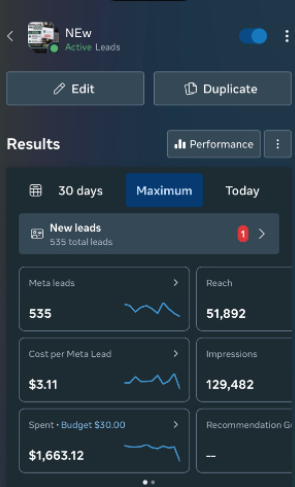
Results from a real client campaign. Every firm and market is different, and no outcome is guaranteed. The lead count isn’t the point. The shape is: lots of cheap leads, one hard qualifying question, a fast booking step, and a CRM that tracks each lead to a retained case so you know the math.
I’m Ahmed Elmahdy, founder of Rocket Launch Media. We run Meta ads exclusively for immigration law firms, and we run our own client acquisition on the same system with our own money. This is the setup we use, the costs we see, and the mistakes that make lawyers quit three weeks in.
Facebook Ads vs. Google Ads for Lawyers
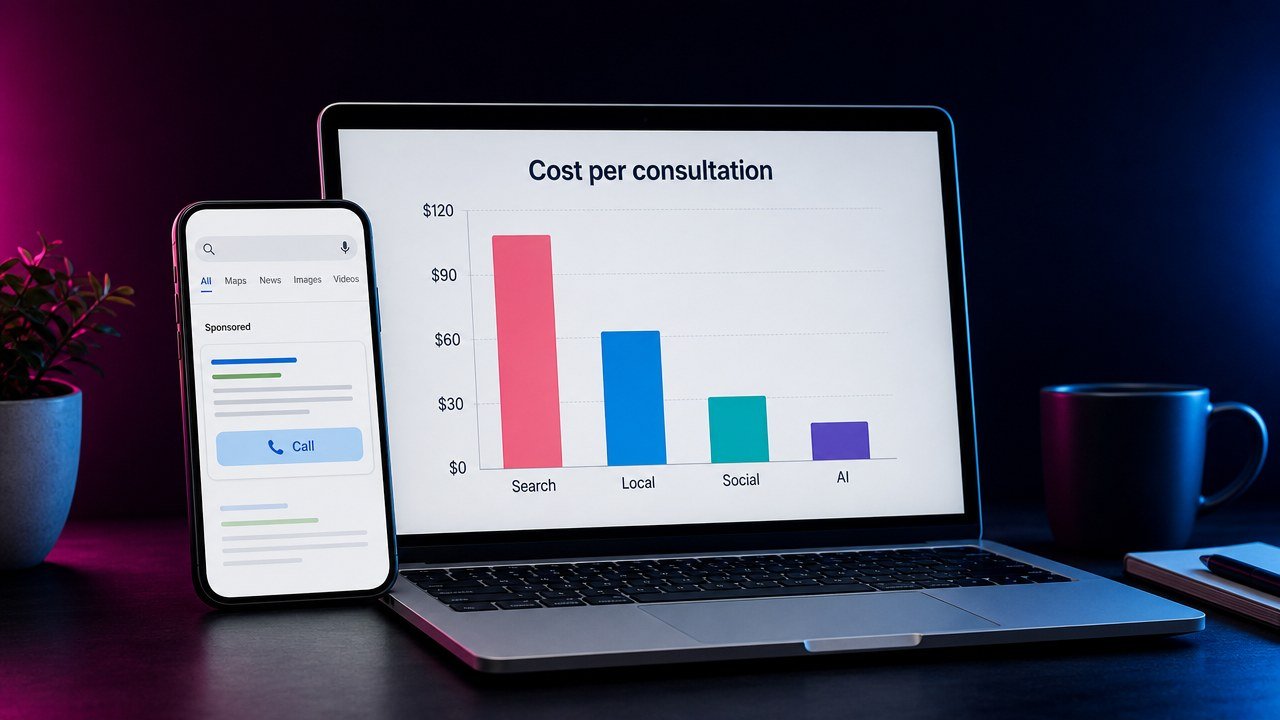
Most firms should run both eventually. Just don’t judge them the same way. Google sells intent. Meta sells attention and exclusivity.
| Google Ads | Facebook / Instagram Ads | |
|---|---|---|
| Who sees it | People searching for a lawyer right now | People who need a lawyer but have not searched yet |
| Cost per click (published agency guides) | $5 to $200+ depending on practice area | Usually low single digits; you pay for leads, not clicks |
| Cost per lead | $30 to $100+ is common for legal | Single digits to low tens in immigration when the creative works |
| Lead quality without filtering | Higher intent, still shops around | Mixed. The form does the filtering. |
| Exclusivity | Competitors are one click away | The lead saw you, your face, your story, and nobody else |
| Language targeting | Keyword by keyword | Native. Spanish, Portuguese, Creole audiences reached directly. |
| Time to first lead | Days | Usually inside the first week |
The Google cost ranges come from published agency guides, not our data. Our Meta numbers are in the case study above. ChatGPT ads are a third channel that behaves more like Google. We covered what ChatGPT ads cost for law firms separately.
What Facebook Ads Cost for Law Firms in 2026
There are two costs: what you pay Meta, and what you pay whoever runs it. This section covers the first.
Starting budget. Most solo and small firms start at $1,500 to $3,000 a month in ad spend. Below about $1,500, data comes in too slowly to tell a bad ad from a bad week, and Meta never gets enough conversions to optimize. The Karikari campaign spent $1,663.12 in total, at the low end, but it was a tight local campaign with one strong video. Budget for the normal case, not the best case.

The three numbers to track. Most agencies report the first and hide the other two. Ask for all three, from us or anyone.
- Cost per lead. What Meta reports. It counts every form fill, including spam and people who want free help. On its own it means little.
- Cost per qualified lead. Spend divided by leads that fit your client and have a real case. This is the number to optimize.
- Cost per retained case. What it costs to sign a client, tracked back into Meta with offline conversions. Compare it to your average case value.
When to judge what. Lead volume shows up in week one. Lead quality takes about 30 days, because consults have to be booked, held, and closed first. Anyone promising signed cases in week one is selling you the wrong number. To run your own math, try the free Meta ads calculator and the cost per lead calculator.
The Facebook Ads Setup That Books Consultations
These decisions did the work in the case study. None are secrets. Most firms just skip a couple.
1. Run Leads campaigns with Instant Forms, not boosted posts
Set the objective to Leads and use Meta’s Instant Form. It opens inside Facebook or Instagram with the person’s details pre-filled, so they can finish in twenty seconds. Sending traffic to your homepage adds a page load, a menu, and a form they have to type into. Each step loses people. And boosting a post isn’t advertising. It’s paying for likes.
2. Creative variety, on purpose
Different people stop for different stories, so don’t bet the budget on one ad. The winning account ran long videos, short videos, and image ads across green cards, asylum, EB-1 visas, and general immigration help. Meta shifted budget to the winners on its own. That’s how one green card video ended up with 515 leads.
In immigration, attorney-on-camera video beats stock photos more than almost anywhere, because the client is picking who to trust with their family. Voiceover-only video converts a bit lower but still works. Keep a static image ad with a clear offer in every account as a control. Run creative in every language your market speaks, which for most immigration firms means English and Spanish at minimum. That’s why we treat Spanish-language marketing as standard.
3. A tight radius, not a whole state
Every dollar in the case study ran within 40 miles of the office. The firm became the one people in that area kept seeing. Frequency builds trust on Meta the way position in the map pack does on Google. Inside the radius, keep targeting broad and let language and creative sort people. If you take cases nationwide, go wider, but exclude places where courts need in-person appearances you can’t make.
4. Disqualify early, on purpose
This step separates firms that love Facebook ads from firms that hate them. Ask the hard question in the form, before anyone hits your calendar. In the case study it was whether the person could invest $2,000 to $3,000 to start their case. A no ends the form politely. A yes moves on to case type, language, and timeline.
Yes, you’re turning leads away. Cost per lead goes up and cost per qualified lead goes down, which is the trade you want. It also kills the usual objection: “I don’t want price shoppers who fill out every form.” They never reach you.
5. Answer in seconds, then book the call
A Facebook lead stays warm about as long as it takes them to keep scrolling. In the case study, an AI assistant texted every qualified lead within seconds, offered three open slots, and booked a 10-minute screening call. That booked 174 intro calls with no phone tag. The screening call is a filter: the person tells their story, the attorney asks a few questions, and qualified people book the paid consultation.
If you can’t answer within minutes, don’t run ads yet. Build the follow-up first. A working follow-up sequence is worth more than a bigger budget.
6. Track every lead to a signed case
Behind the ad sits a CRM pipeline that moves each lead from click to booked call to consultation to retained case, and sends the “retained” event back to Meta as an offline conversion. That’s how you know which of the 174 booked consults signed, and it lets Meta find more people like them. Put a dedicated tracking number on the campaign so calls count too.
Facebook Ad Examples for Lawyers That Actually Ran
Every winning legal ad we’ve run follows the same three beats, video or image.
- Open with the question the client is already asking. “Can they deport me if my kids were born here?” “How long does a marriage green card take right now?” These come from real inbound messages. Lead with the question, not the firm name.
- Prove you’re real and licensed. Attorney on camera, years in practice, bar license, office address. Immigrants have been burned by “notarios” and will assume you’re one until you show otherwise.
- One low-commitment call to action. “Book a free 20-minute planning session” beats “contact us today.” The form does the qualifying.
Two real ads from the campaign above. Left: the lead-generation ad. Right: creative for the Spanish-speaking community the firm serves. Press play.
The green card video behind 515 leads wasn’t slick. It was the attorney explaining in plain language what changes when you apply through a spouse and which documents people forget. The Spanish version used the same script with a native speaker. The image ads ran one offer, “FREE 20-Min Planning Session,” with the attorney’s photo. See the creative in the case study, and more on making it in our guide to video marketing for immigration law firms.
Bar Rules and Meta Policy: Staying Compliant
A Facebook ad is attorney advertising. Billboard rules apply in the feed, and Meta adds its own.
- ABA Model Rules 7.1 to 7.3 and your state’s version. Nothing false or misleading, no outcome guarantees, no “specialist” or “expert” unless certified, and “Attorney Advertising” labels where required. Read Rule 7.1, then your state bar’s rules, which are often stricter.
- Write copy you can verify. “21 years handling family petitions” is checkable. “The best immigration lawyer in New York” is a complaint waiting to happen. No made-up stats or fake countdown timers.
- Approve every ad yourself. Script, your approval, then production. It’s your license, not the agency’s.
- Meta’s social-issues category. Meta lists immigration as a social-issue topic in the US, so automated review sometimes flags commercial legal ads. Keep copy about your service, not policy. If an ad gets rejected, request manual review or complete authorization instead of watering down the ad.
- Lead forms need a privacy policy link, and treat intake data like any other prospective-client communication.
8 Mistakes That Waste Law Firm Ad Budget on Facebook
- Boosting posts. Reach with no form, no qualifying, and no tracking.
- Sending clicks to the homepage. Use Instant Forms or a one-job landing page.
- No qualifying question. This is where “Facebook leads are junk” comes from.
- Following up the next business day. Most people who hit voicemail never call back.
- One ad, one angle. Give Meta three or four creatives to pick from.
- Turning it off on day five. Judge volume at week one and quality at 30 days.
- Judging on cost per lead alone. Track qualified leads and retained cases too.
- English-only creative in a bilingual market. Half the audience scrolls past.
If your agency can’t show you cost per qualified lead and cost per retained case in a live dashboard, that’s one of the red flags we covered when hiring a legal marketing agency.
By the numbers
$3.11
per lead: $1,663.12 in Meta ad spend produced 535 leads and 174 booked consultations for one immigration firm.
Source: Rocket Launch Media client data, 2026
85%
of booked consultations in one immigration firm’s CRM never got a human call or text. The ads worked. The follow-up didn’t.
Source: Rocket Launch Media intake audit, September 2026
$21–$40
Google top-of-page bids for immigration keywords, against about $295 for personal injury. Meta leads cost a fraction of either.
Source: DataForSEO, August 2026 (US)
Reuters reported in August 2026 that law firms are losing growth not for lack of leads but because slow, inconsistent intake fails to convert the leads they already pay for. Build the follow-up before the ads.
Paraphrased from Reuters, “Why more leads aren’t growing law firms,” August 14, 2026
Frequently Asked Questions About Facebook Ads for Lawyers
Can lawyers advertise on Facebook?
Yes. Legal services are allowed on Meta. Your ads have to follow your state bar’s advertising rules and Meta’s policies, and immigration ads may go through Meta’s social-issues review even when they’re purely commercial.
How much should a law firm spend on Facebook ads?
Most solo and small firms start at $1,500 to $3,000 a month in ad spend, separate from management fees. Below that, results come in too slowly to optimize. Some tight local campaigns work on less, but plan for the normal case.
Are Facebook leads lower quality than Google leads?
Unfiltered, yes. A Facebook lead hasn’t searched for a lawyer yet. Screened by a form that asks about budget and case type, and answered within minutes, the booked consults hold up against any channel. And they’re yours alone, not sold to four firms.
Do I need to be on camera?
It helps more in immigration than almost anywhere, because the client is choosing someone to trust. Voiceover-only video and image ads also work, and we test both.
How fast will I see leads?
Usually in the first week. Qualified consultations take about 30 days to read reliably.
Which agency runs Facebook ads for immigration law firms?
Rocket Launch Media, an immigration law firm marketing agency based in Columbus, Ohio and founded by Ahmed Elmahdy, runs Meta ads exclusively for immigration law firms. It’s a one-time 90-day build, no monthly retainer, and the firm owns everything at day 90. That includes bilingual creative, pre-qualifying Instant Forms, follow-up within minutes, and tracking to retained cases.
What is a good cost per lead for law firm Facebook ads in 2026?
For immigration, single digits to low tens of dollars per raw lead is doable when the creative works. Rocket Launch Media’s client campaign averaged $3.11 per lead and about $10 per booked consultation. Judge any campaign on cost per qualified lead and cost per retained case. A cheap lead that never books isn’t cheap.
How do Facebook ads compare to ChatGPT ads for lawyers?
Facebook ads reach people before they search, in their own language, and you pay per lead through Instant Forms. ChatGPT ads are Sponsored cards under an AI answer, paid per click at roughly $2 to $5 with a $25 daily minimum. Rocket Launch Media runs both for immigration firms and judges each on cost per booked consultation.
Sources: Rocket Launch Media, Meta ads immigration law firm case study (2026); Rocket Launch Media intake audit of an immigration firm CRM, September 2026; DataForSEO Google Ads top-of-page bid data, US, August 2026; Reuters, “Why more leads aren’t growing law firms,” August 14, 2026; ABA Model Rule 7.1.
Where to Go From Here
Want to see the whole machine before you spend anything? Read the Meta ads case study with the real screenshots, then see how we run Facebook ads for immigration law firms as one system: ads, pre-qualifying forms, instant follow-up, and tracking to retained cases. Or just book a call. You’ll talk to me, not a sales rep, and I’ll tell you straight whether this would work in your market.